
AI Puts Fuel on the Fire
Guy Rubin, Managing Director of Revenue Intelligence at Fullcast
This episode is a skillPipeline qualify-out reviewFree to download or run in Claude →On the Stack Index · 1 tool
Guy Rubin’s full stack, by layer →- SalesforceSystem of RecordCRM at Fullcast, with Fullcast's own planning, commissions, forecasting and call recording suite around it
Guy Rubin on why pipeline rose 68% while revenue per seller fell, and what the teams that got more efficient did differently
Every revenue team has a dashboard that says the pipeline is fine. Then the quarter closes and it was not. In the 2026 benchmark data, top of funnel pipeline creation rose 68% in a single year, more than 3 in 4 sellers missed quota, and average revenue per seller went down.
“AI puts fuel on the fire. And if the sales motion is inefficient, it’s going to get a whole lot more inefficient when you throw AI on top of it.”
Meet Guy Rubin, managing director of revenue intelligence at Fullcast. He founded Ebsta, grew it to about 1,000 customers, sold it to Fullcast, and now runs the quarterly go-to-market audits behind the GTM benchmarks he has published with Pavilion for 4 years. He joins GTM Vault for episode 56 to explain why teams that bolted AI onto an unqualified motion got measurably worse, and why the ones that got better worked fewer deals.
About Fullcast
Fullcast is a revenue operations platform for B2B revenue teams, covering territory and capacity planning, quota and commissions, forecasting and revenue intelligence. It was founded by Dharmesh Singh and Bala Balabaskaran and is headquartered in Salt Lake City, where Simplus co-founder Ryan Westwood became CEO in January 2024 alongside a $34 million round led by Epic Ventures, with Companyon Ventures, Firsthand Alliance, True Blue Partners and Sepio Capital participating. It has since bought its way across the stack, acquiring Atrium and Ebsta in August 2025 and Copy.ai in October 2025, alongside Commissionly. Its 2026 Benchmarks Report is built on $78 billion in pipeline, 361,000 opportunities and 2,500 sellers across 316 companies.
Watch or listen now across YouTube, Apple Podcasts, and Spotify
Episode highlights
(0:00) Trailer
(2:51) What the 2026 benchmarks measured across 316 companies
(4:25) 3 in 4 sellers missed quota as pipeline rose 68%
(6:11) The 2 AI universes
(8:13) The stage 2 finance gate and 7x win rates
(11:10) Balanced territories and routing: 11% and 15%
(12:30) Engagement, the data point no CRM holds
(17:35) AI puts fuel on the fire
(20:20) What to do with 31% of open pipeline at risk
(25:10) Relationships are driving revenue
What you'll learn
- Why top of funnel pipeline rose 68% in a single year while average revenue per seller fell across 316 B2B companies
- How sales velocity, average deal value times win rate divided by sales cycle, reduces a revenue org to dollars per day
- Why more than 3 in 4 sellers missed quota and nearly 60% did not reach 80% of their number
- How the disciplined minority worked fewer deals, moved up market and lifted revenue per seller by over 60% in 1 year
- The stage 2 finance gate that carries win rates 7x higher than engaging finance at stage 4
- Why balancing territories adds about 11% growth and routing by vertical expertise lifts win rates by about 15%
- The 30 opportunity ceiling past which sellers stop multi-threading and engagement thins across the whole book
- Why deals stalled past 60 days sit at single digit win rates and belong closed out, not nursed
- How partners, referrals and in-person dinners are gaining efficiency while cold volume motions lose it
- Why the territory that qualifies out the most early is the one that builds the most at quarter end
Key takeaways
- Pipeline rose 68% in a year, and that volume is what pulled revenue per seller down. The 2026 benchmarks cover 316 B2B software and services businesses, and top of funnel opportunity creation rose 68% in a single year, mostly from AI. More than 3 in 4 sellers missed quota over the same 12 months, and nearly 60% did not reach 80% of their number. Average revenue per seller fell, because the extra opportunities landed in motions that did not know how to qualify out.
- There are 2 AI universes now, and the dividing line is whether the motion can qualify out. The majority pointed AI at the top of the funnel as a volume play, with few gates, no agreed entry and exit criteria, and sellers left to run their own motion. A minority pointed it at the last 2 years of closed deals to find what wins, then wrote that back into the stages as gates. That minority worked fewer deals, moved up market and lifted revenue per seller by over 60% in a single year.
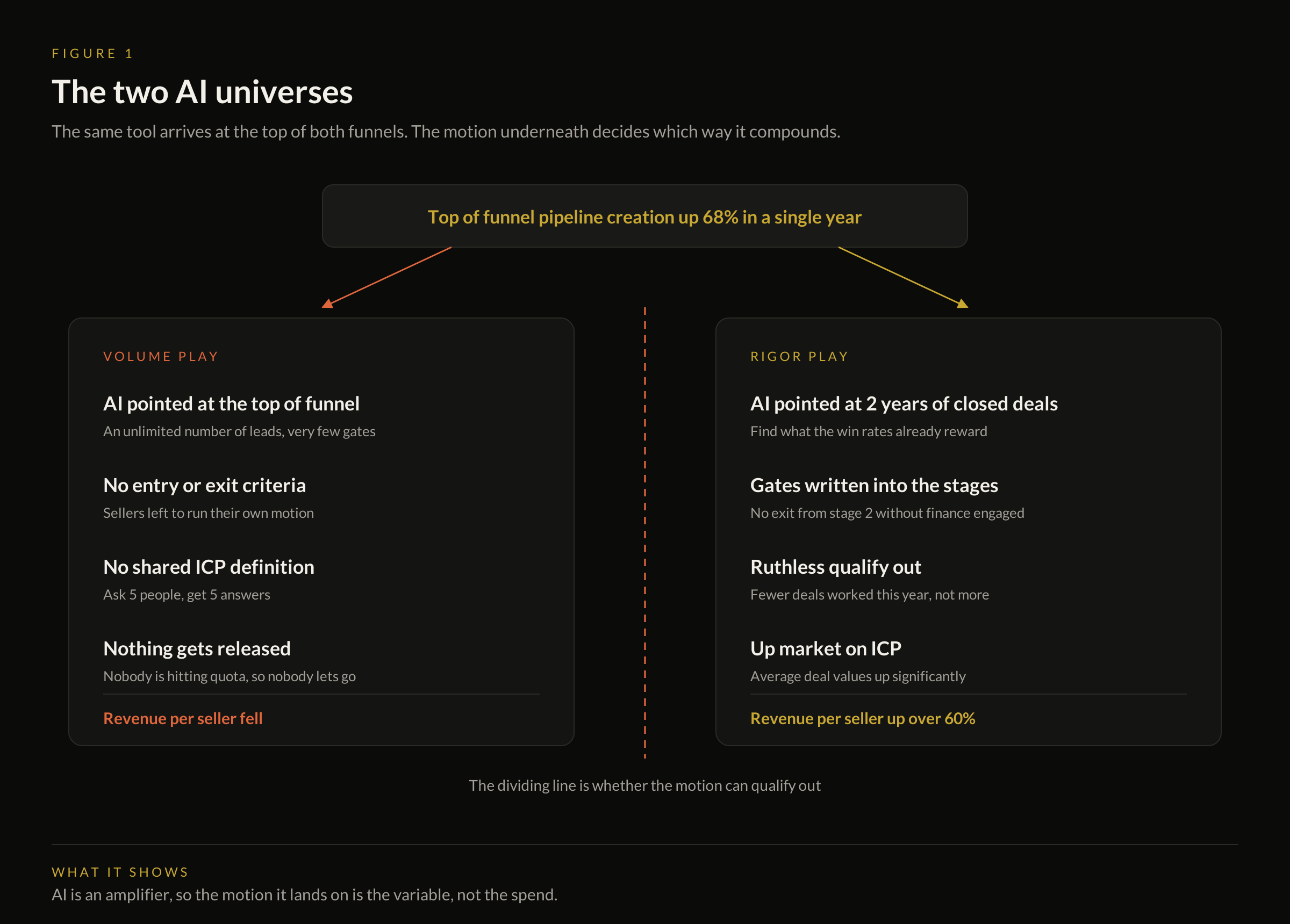
Figure 1. Both columns got the same tool. Only one had a stage it was not allowed to skip.
- Engagement is the forecast input the CRM never held. Rubin’s engagement score turns email traffic, calendar events, calls and transcripts into 1 number out of 100, and the goal is a threshold, not 100. Read back against closed deals, a score above 60 with the finance persona engaged at stage 2 carries win rates 7x higher than reaching finance at stage 4. Stage is a label a rep applies, while engagement polices itself: a finance lead does not spend 3 hours on a contract they will not sign.
- Capacity and routing move win rates before any hiring decision does. In a complex B2B motion, sellers carrying more than about 30 open opportunities stop multi-threading, and their engagement thins across every account they hold. Balancing territories against that load adds about 11% growth in a single year, and routing leads to sellers with matching vertical expertise lifts win rates by about 15%. Most teams still settle both with round robin, which is a distribution rule, not a capacity plan.
- The cheapest growth in the 2026 data came from closing deals out, not opening more. Sellers close between 15% and 30% of what they work, yet teams spend 3x more effort on deals that close lost than on deals that close won. Once a deal stalls past 60 days its win rate drops to single digits, which is how one audited company ended up with 31% of open pipeline in that state. The territory that qualifies out hardest in the early stages is the one that builds the most at quarter end.
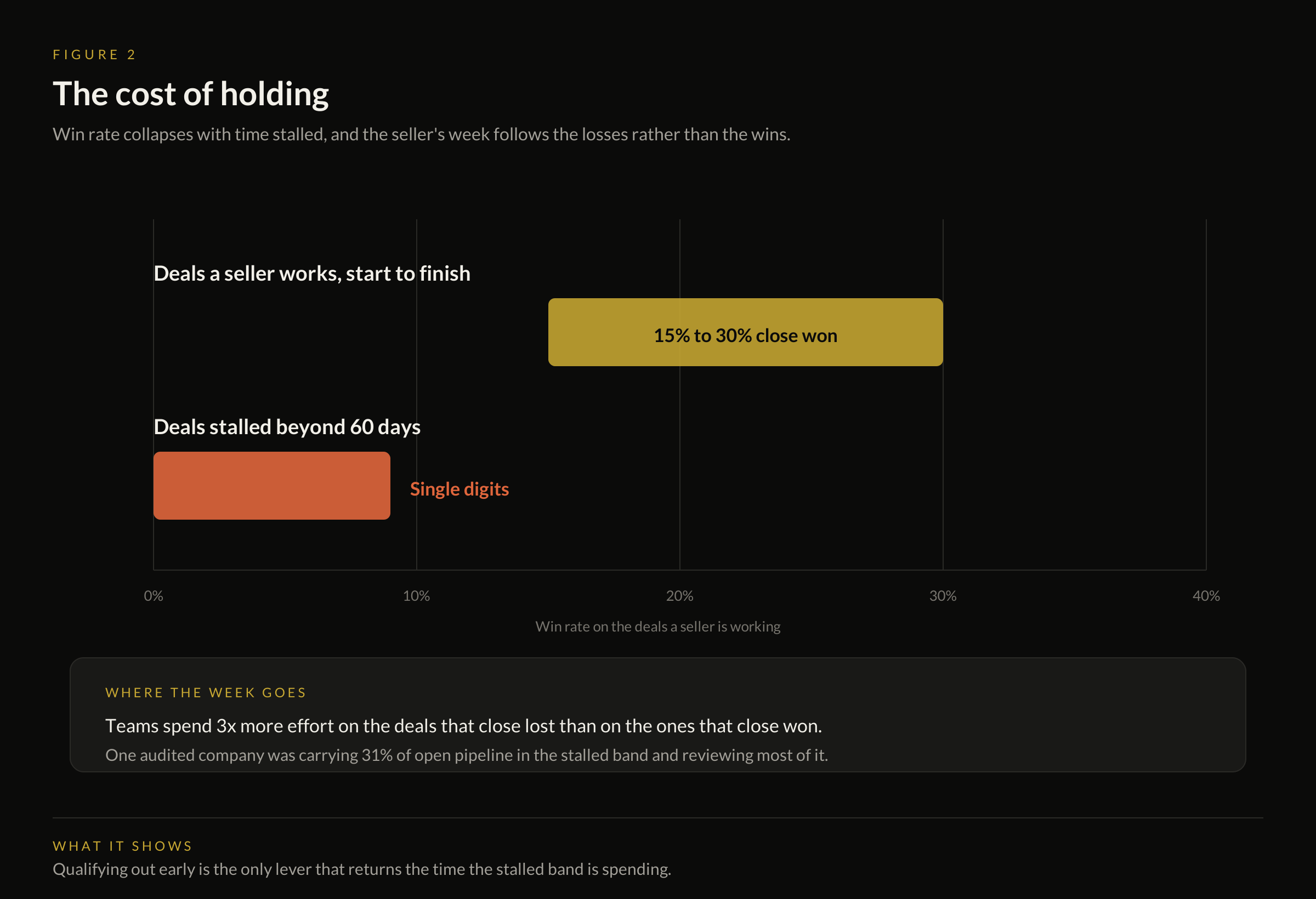
Figure 2. A deal past 60 days is not optionality. It is the largest line item in the seller’s week.
Links
Guy Rubin
LinkedIn: https://www.linkedin.com/in/rubinguy/
Fullcast: https://www.fullcast.ai/
2026 Benchmarks Report: https://www.fullcast.ai/ebooks/2026-benchmarks-report-the-state-of-gtm-in-2026
Rick Koleta (Host)
LinkedIn: https://www.linkedin.com/in/rickkoleta
GTM Vault
LinkedIn: https://www.linkedin.com/company/gtmvault
YouTube: https://www.youtube.com/@gtmvault
Website: https://gtmvault.co/
Previous episodes include
See all previous episodes here
The GTM Vault Podcast is a breakdown of how high-growth companies design, test, and scale revenue architecture. Visit gtmvault.co for more episodes, the GTM Vault newsletter, and Show Me Your Stack.
Full transcript7,191 words · open to read or search
Full transcript of GTM Vault Podcast episode 56, lightly edited for readability: names and product names corrected. Speech is otherwise as spoken, and timestamps refer to the episode video.
[1:41] Rick Koleta: Every revenue team has a dashboard that says the pipeline is fine. Then the quarter closes and it was not. Guy Rubin has the data on why. Sales efficiency is down 28% in a year when teams added more tools and more AI than ever. In this episode of GTM Vault, Guy breaks down what the 2026 GTM benchmarks measured, why the extra volume did not turn into revenue, and what the teams that are winning.
[2:08] Rick Koleta: Do differently. Welcome to GTM Vault, trusted by 27,000 plus founders and operators building the future of revenue. My guest today is Guy Rubin. Guy built Ebsta on the bet that engagement data predicts revenue better than what reps type into the CRM. Ebsta is now part of Fullcast, and Guy publishes the GTM benchmarks.
[2:08] Rick Koleta: Built on real data from three hundred and sixteen companies. Today's core question if sales efficiency is down twenty-eight percent, is that a market problem or an execution problem? Guy, welcome to GTM Vault.
[2:46] Guy Rubin: Rick, thank you so much for having me and appreciate getting onto the podcast. I've been a long time listener.
[2:50] Rick Koleta: So guys, sales efficiency is down twenty eight percent. What exactly did you measure?
[2:56] Guy Rubin: Okay, so those that may have already seen the report will know that we produce these reports in conjunction with Pavilion and have done that for the last four years. Currently working on what might be for the 2027 benchmark report as we speak. this report was the largest report we've ever done. So we've looked at data from 316 B2B software and service businesses.
[3:22] Guy Rubin: There's a breakdown of the size and shape of those organizations and the vertical markets they sit in on the second page of the report. And I believe we're going to give everyone a link to download it for free for anyone who's listening.
[3:32] Rick Koleta: Per seller, per dollar or per deal, is there any kind of context you can give us on the report right now or?
[3:40] Guy Rubin: Yeah, sure. So one of the data points I lean into a lot is what we call sales velocity. And what it does, it's a great leveler because it distills everything down to dollars per day. And so you can look at the sales efficiency of the whole organization for a specific team. You can compare different motions, look at different geographies or territories, and you can see if your organization is getting more or less efficient by the dollars per day that the sales function is able to generate.
[4:03] Guy Rubin: So that sales efficiency number is easy to digest. It's made up of the, if you can imagine the total, the average deal value times by the win rate. So, and divide that by the average sales cycle. And that will tell us if the sales efficiency is progressing upwards or downwards over time.
[4:19] Rick Koleta: And was there a first number that made you stop and rerun the query?
[4:24] Guy Rubin: Yeah, well, I think what was most interesting about the 2026 data is that we saw that over three quarters of sellers didn't hit their quota in the last 12 months. And of those, we saw that nearly 60 percent of sellers didn't hit 80 percent of their number. OK, so we can see that we're living in that 80 20 world where 20 percent of the sellers are overachieving their quota number, while 80 percent over this long tail of underperformance.
[4:51] Guy Rubin: And the number that really shocked me most isn't necessarily that 80 % of the sellers aren't hitting their number or 60 % aren't hitting 80 % of their number. The piece that shocked me the most is that all of this happened in a year where we saw top of funnel pipeline creation increase by 68 % in a single year. Okay. And so we saw all of this pipe generation happening mostly with this massive impact of AI.
[5:13] Guy Rubin: And instead of people using, and effectively what that's done is it's had a big impact on top of funnel opportunity creation, but we're funneling all those opportunities into go-to-market motions that don't know how to qualify out. And so what happens is we just get less efficient because the majority of those deals aren't ICP, they don't have good win rates, they're not good average deal values. And so sellers that are missing the number anyway, wanna hold onto their deals for far too long.
[5:39] Guy Rubin: And we've seen this massive delta between the average number of days it takes to close one a deal versus close lost, also in the data. And all of this is leading to average revenue per seller dropping last year rather than increasing with all of these AI initiatives.
[5:53] Rick Koleta: And would you say that's the the the big the real d number or would you say that is the the the number that most GTM leaders could not believe that revenue is actually down for rep what was the the biggest takeaway from from this report in Europe?
[6:09] Guy Rubin: think the biggest takeaway is that what we're seeing is an emergence of two different AI universes. Okay, so the vast majority of organizations are using AI as a replacement for our old growth at all cost motions. So they're using AI as a volume play. They're trying to generate infinite number of leads using AI top of funnel. And the problem is, as I mentioned before, that all we're doing is generating a slop, a very low quality
[6:36] Guy Rubin: poor win rates, low deal values, and deals that take a very long time to close. Instead of the minority of organizations that are using AI to introduce rigor and process and consistency in the way that they operate. And in those organizations, they're focusing much more of their energy on their ICP opportunities. Actually, the number of deals they worked on this year actually went down, not up, but the average deal values went up significantly. So these organizations went up market.
[7:03] Guy Rubin: They focused on their ICP. They got ruthless in qualifying out. And they were able to increase revenue per seller by over 60 % in a single year. So you've got the volume play that are becoming less efficient and having to hire more sellers to deal with this low quality volume of leads that don't really understand how to qualify out. And it's very wild west, very little process, very little consistency in the way that they're operating.
[7:25] Guy Rubin: very few gates and triggers around exit and entry criteria for stages, very little consistency in the way that they qualify, and kind sellers being left to their own devices. And in those environments, unsurprisingly, we're seeing the efficiency drop, the number of sellers missing quota increase, and the business just becomes clogged up with all of these poor quality leads. And no one's hitting quota, so they don't want to let anything go.
[7:47] Guy Rubin: And then on the other side, your organizations where they've got proper leadership that are focused on structure and process and rigor in the way that they qualify out, these organizations are focused much more on their ICP prospects. They're moving up market. They're working on much bigger deals. They're able to close them with better win rates and in a shorter amount of time because they're following a process they know that works. A good example of that would be, so,
[8:13] Guy Rubin: I'll tell you a little bit more about what I do at the moment in a minute. if we analyze the last year's worth of deals and we can see that our win rates are seven times higher if we can engage with the finance persona at stage two instead of stage four, then if we can get everyone brought into the principle that we don't leave stage two now without a finance persona actively engaged, all of a sudden you've now got a gate that stops us leaving stage two. And you start to do that with all of the other signals around the different motions within the business. You start to introduce that structure that you need.
[8:39] Guy Rubin: that allows everybody to understand what good looks like and allows the team to be ruthless in qualifying out deals when the customer perhaps won't give you access to the right stakeholders.
[8:50] Rick Koleta: Like to d dig in a little deeper into the numbers here. You know, I believe the these numbers are from your report. The wrong ICP can cut close rates by nearly 75%. Is that that correct? Matching reps to the right accounts lifts them by about forty percent. So is this round robin dead? What would you build instead?
[9:11] Guy Rubin: Okay, so it might be worth if I take a step back to explain to the audience a little bit about what I've been doing. So I was the founder and CEO of a software company called Ebsta. We were in the revenue intelligence space and we grew to about thousand customers and we sold that business in August last year to Fullcast. So I'm now the managing director of revenue intelligence at Fullcast. Fullcast are a much larger software company in the revenue tech space. They started as a territory planning and capacity planning solution.
[9:36] Guy Rubin: They then acquired a business in the commission space. So that gives them what they call plan to pay. We sat as the revenue intelligence piece in the middle and they've acquired a number of other businesses since then. So a very fast growing software company in the revenue tech space. When I sold the business, I was working on a pet project, which was to deliver our customers an audit of every quarter of everything going on in their go-to-market motion. And we've developed that now to a point where...
[10:02] Guy Rubin: we started selling these audits independently of our software. And so this year, I've now done over 300 of these audits into mid-market enterprise businesses. So I'm going in and producing a 50-page picture-based soup-to-nuts audit of the whole go-to-market motion. And we're not just connecting to CRM or throwing Claude at our call recordings. We've also got an engine that extracts all of the contacts and engagement taking place in the mailboxes and calendars as well.
[10:30] Guy Rubin: So we bring together all these disparate data sources and because the data has been sourced from source rather than from what sellers happen to put into Salesforce, we're able to build a real picture of what actually took place on every deal closed one and lost over the last couple of years. So I deliver four reports a year back to all of our customers and we deliver them within a couple of weeks of the quarter, so before their board meeting. So I get to sit in front of leadership teams of mid-market enterprise businesses.
[10:54] Guy Rubin: and I give them back an audit of what I'm seeing is going on within their go-to-market motion, and I get to compare them to their previous courses, but also against the wider benchmarks. So when we talk about the insights, for example, you were asking about the lead routing. So we see on average and capacity planning.
[11:11] Guy Rubin: When territories are not balanced, when sellers have got too much to work on, which is one of the biggest challenges we're seeing this year, is too many opportunities. What we see is that they don't multi-thread as much as they would if they weren't over capacity. They don't go as deep with the customer. Their engagement is not as strong. And what happens is their win rates are then affected. If you then compile on top of that, that people are moving from this kind of round robin approach to distributing their leads,
[11:37] Guy Rubin: to actually using AI to make sure that the right sellers getting access to the right opportunities. And if I'm an expert in manufacturing industry, well then I get to take all the manufacturing leads because I'm able to talk their language. And the data shows us that those leads get closed better by sellers that are experts in those verticals. And so those two combinations, on average we see imbalanced territories moving to balanced territories.
[12:00] Guy Rubin: increases revenue or growth by 11 % in a single year. So you can have an 11 % increase in growth just by balancing your territories and you can increase your win rates by about 15 % by routing the right leads to the right sellers.
[12:18] Rick Koleta: Got it. And if you were to pick one data point that CRMs do not have, but if they did, it would have the biggest impact. Is is there one that you could point to?
[12:29] Guy Rubin: It would be engagement. So measuring engagement is quite a messy thing to do. looking at email traffic, calendar events, call records and transcripts, we found a way of distilling all of that down to a single number. It's an engagement score and it's always out of 100. Now the thing with an engagement score is you're not aiming to get to 100. This isn't about you get to 100 and you win the deal.
[12:50] Guy Rubin: But what happens is we can we can look back at the deals that closed one lost in the past and look at the interactions that took place via email the calls that took place the meetings that happened and We can start to build a picture that when you get an engagement score above 60 for example with that finance persona at stage 2 your win rates are seven times higher So that engagement score is the missing piece of the puzzle for me, especially in B2B sales It really understanding how much engagement you need with different stakeholders at different stages of the sales cycle and how multi-threaded you need to be
[13:18] Guy Rubin: seems to be the piece of the puzzle that's missing when people are trying to accurately predict their forecast for the end of the course.
[13:25] Rick Koleta: Yeah, but this is very tricky, right? Because ultimately doesn't this correlate to the marketing team's effectiveness? If I mean how well?
[13:33] Guy Rubin: Well, engagement is something we measure post marketing. So it's once they enter an active sales process, understanding the momentum and engagement with different stakeholders and scoring that engagement. and understanding which stakeholders within your business need to be engaged with which stakeholders at the prospect or customer. So I think what marketing is very good at is monitoring things like intent. But if you can get imagine a graphic where you've got intent and engagement on the same graph.
[13:58] Guy Rubin: And you can start to see where you've got high intent accounts that have had a low engagement from the sales team. Or the opposite, an account that's got loads of engagement with the sales team, but they're not really showing any intent signals. So we're perhaps spending a lot of time there. So I think intent is specifically the way I think about intent. It's a sales metric. And it shows us whether we've really got momentum and engagement with the right stakeholders. Because a finance persona is not going to spend three hours reviewing a contract with you if you're not a contract review stage. It's of self-policing.
[14:25] Guy Rubin: And just because I sent you a thousand emails, doesn't mean we're engaged. If you don't respond, the engagement score will remain at zero.
[14:32] Rick Koleta: Got it. And reps with a man going back to what you were saying about reps not having manageable workloads in the past year, you wrote that reps with man manageable deal loads close fifty seven per percent more often. How how do you set the right load?
[14:54] Guy Rubin: the history will tell us. So it's different for every organization. In fact, it can be different for every territory. But understanding, if you want a rule of thumb, if you're running a complex B2B sales process, if a seller's got more than 30 opportunities, that's too much. that number might be materially less or materially more. It depends on how complex your motion is. But the numbers will tell us. We can show you that when they get too busy, they're not engaging enough.
[15:16] Guy Rubin: we can see that they're not as multi-threaded when they've got too many opportunities on. But what's fascinating is that when I look at organizations that have multiple territories, almost always the territory that qualifies out the most in the early stages is the territory that builds the most at the end of the quarter.
[15:35] Rick Koleta: Interesting. And w why does the gap between top performers and everyone else keep growing? Would you say it it is because of hiring, enablement, territories, or something else?
[15:47] Guy Rubin: think it's leadership. I think we've got a problem with leadership. We're allowing sellers to, especially now with everyone's got their own AI Claude sitting next to them, everyone's running their own motion. There's no organizations that have got strong leadership, a lot of structure, and everyone knows what's expected of them and is able to introduce consistency. think that's the watchword of the year. If you can introduce consistency in the way that you're operating.
[16:09] Guy Rubin: If it doesn't matter which seller you ask what your ICP is, or whether you're asking the sellers, the managers, or the marketing department, or your customer success team, what makes a customer ideal, customer profile criteria? If everyone's saying the same thing, you're winning. If everyone agrees what the criteria is to lead discovery, you're winning. If everyone understands which stakeholders need to be involved before we move through to the proposal stage, you're winning.
[16:32] Guy Rubin: If everyone gives you different answers, there's no consistency. And that lack of consistency is why you can see the top performers that are able to sniff out good work, good opportunities, just because they've got it built within them. They're able to do it anyway. And they're the ones that are most ruthless when it comes to qualifying out. They won't waste their time on deals that are never going to close. But the more junior resources are not getting the structure and the guidance that they need from leadership to actually know what's expected of them at every stage of every sales cycle. And as well as that,
[17:02] Guy Rubin: have the confidence to qualify out deals that are never going to close.
[17:05] Rick Koleta: Well, I mean things are changing so fast at this point. Do you think it's a misallocation of resources from leadership in that regard or it's just because the the mark the the approach with AI is increasing sales efficiency so much that it's hard to kind of
[17:23] Rick Koleta: I couldn't I couldn't word that properly. Okay, never mind. Scratch that. We'll move on to the next question. what did this year's report prove wrong from last year?
[17:35] Guy Rubin: think everyone thought that AI was going to be their savior. And in fact, all it's done is AI puts fuel on the fire. And if the sales motion is inefficient, it's going to get a whole lot more inefficient when you throw AI on top of it. If the sales motion has rigor and consistency in the way that it operates, then throwing fuel on that fire means you're going to get even more efficient and it's going to compound. The problem you've got is that most GTM motions are broken.
[17:58] Guy Rubin: and throwing fuel on that fire means that they just get a lot more broken a whole lot quicker.
[18:05] Rick Koleta: Yeah, AI added a lot of volume, but if the architecture is not built correctly, right, it's it's not gonna work. where where do you
[18:13] Guy Rubin: It doesn't always add value. It doesn't always add volume. For most organizations it does. And most organizations aren't ready for that volume. The organizations that are using it to introduce consistency and process, making sure that they're using the AI to analyze every deal that's happened in the last couple of years and understand what best practice looks like and implement and then replicate that across the sellers and train the sellers and use AI to identify weaknesses. Cause we've recently just introduced a new chapter in these reports. We call it the coaching chapter.
[18:36] Guy Rubin: And effectively what we've done is come up with seven cohorts or categories of sellers. And those seven categories need different types of training. So if you're what we consider a roller coaster seller, well, you need a different set of training to a dry pipeline seller. So different sellers that have different characteristics might need different types of coaching. And AI can help us do that analysis at scale and bring everybody in line with best practice.
[19:03] Guy Rubin: But it needs proper leadership and it needs structure and rigor. And more often than not, we don't go that route. We just use AI to generate a little more volume. And then we wonder why inefficiencies have gone up. And that, me, is the big surprise. I think over 90 % of company-wide AI projects have failed to achieve their goals.
[19:19] Rick Koleta: Wanna talk a little bit about forecasting. You have always said deal stage lags in engagement leads. what does engagement tell you that stage does not?
[19:30] Guy Rubin: It's self-policing. So your stakeholders are not going to give you their time and resource to engage with you if they're not in an active process to buy. And so measuring engagement is, we've seen time and again, is a phenomenal way of identifying opportunities that are real, but most importantly, to be able to identify risk in the deal before it closes lost. So when people stop engaging with you, it's a really good indicator that these deals are not going in the right direction.
[19:52] Guy Rubin: And so using that opportunity to get your senior leadership team to re-engage with their senior leadership team, let's ask the difficult questions. You're able to get a much clearer understanding of what's going on, rather than just hoping, you know, we haven't heard from this customer at this prospect in three weeks, but it's still in the pipeline. the, when you're thinking about predicting the number at the end of the quarter, the engagement score is the closest thing we've seen to being an accurate.
[20:13] Guy Rubin: way of predicting whether the deals are likely to come in or not, not the stages.
[20:19] Rick Koleta: You showed a customer with thirty percent thirty one percent of open pipeline at risk. What should a team do with that number?
[20:26] Guy Rubin: They need to do a pipeline review and either close the deals off as lost, freeing up the seller's capacity to work on things that could close or reinvigorate deals that are currently stalled and need to be re-engaged. Maybe there's someone else we need to engage with. But look, ultimately, the vast majority of... When you understand that for a particular motion, once deals have stalled by more than, 60 days, the win rates are down to single digits.
[20:50] Guy Rubin: and you find that they're actually 30 % of their pipeline matches that criteria. It's like, why are we holding onto these deals? All we're doing is slowing ourselves down, going through all this exercise of trying to reengage with them, calling out, doing the pipeline review, and all of that is wasted time. Sellers are closing somewhere between 15 and 30 % of the deals that they work on.
[21:09] Guy Rubin: And so what we need to do is reduce the amount of time and energy we spend on the deals that close lost because on average we spend three times more on deals that close lost than we do on deals that close one.
[21:22] Rick Koleta: Well, playing the devil's advocate here, what if you have only a thousand accounts that you're targeting? In that case, how how are you going to you know, if even if the engagement scores are low, it's not like there's so many more accounts you can go after. What what is the sales team tasked with at that point?
[21:41] Guy Rubin: Well, think first of we need to make sure we've got market fit. Assuming we have market fit, well then why are they not buying? Is there an issue? Are we not engaged with the right stakeholders? Is it the wrong seller? When you've got enough sellers, if you're working with three sellers, it's very difficult to do the analysis. But when you've got 20 sellers and four of them are overachieving their number every single quarter, but the other 16 are underperforming every single quarter, well then the problem is not the buyers.
[22:06] Guy Rubin: The problem is the way we're running the sales cycle. And what we need to do is get under the skin of that. And more often than not, it's down to what we see over and over again. I mentioned earlier that the territories that are winning the most tend to be the ones that are qualifying out the most in those early stages. The territories that win the most are also the most curious. They're staying engaged with the customers and they're continuing to qualify, not just in the qualify stage, but they're continuing to ask the questions of the prospect as they're going through the whole sales cycle and then beyond.
[22:30] Guy Rubin: And what we find is that the deals that aren't progressing, there's a whole host of reasons why they might not be progressing, but ultimately, if they're going to close lost eventually, why the hell are we holding onto them? Why are we working on something? Why are we putting time and energy into deals that have got single digit win rates? Either the sellers need to be working on something more productive or the sellers shouldn't be there. We don't need sellers working 8 % win rate deals on 90 day sales cycles.
[22:54] Rick Koleta: Yeah, I want to continue this pushback a little because benchmark reports are also marketing. it is 316 companies that connected their data to a vendor. How representative is that?
[23:09] Guy Rubin: Well, I've not seen another report that comes anywhere close. They've not just connected to the platform. We audit their whole go-to-market motion every quarter. So, I mean, we've got visibility not just of the deals they have in Salesforce, but we can see all of their engagement happening in their mailboxes and calendars. And when they've got it, we also analyze the call transcripts across the board as well. I mean, I'm happy to talk about marketing if you like, because we've got a whole chapter on top of funnel attribution.
[23:31] Guy Rubin: and we can talk about what we're seeing in the data. But I'm certainly not suggesting it's perfect. We don't touch on the B2C market. There's certain verticals that our data is quite light on. But there's no one else out there that's doing as much analysis as we are on the market and what we're seeing.
[23:45] Rick Koleta: So could this just be a tougher market not worth selling? How do you tell the difference in that case?
[23:53] Guy Rubin: Well, I these are all businesses turning over tens of millions, if not hundreds of millions of dollars, right? So they are working. I think the question you're asking is why are they less efficient? And again, what we see, the evidence is there. They're not all less efficient, right? Not every sales organization is losing or is getting less efficient, but the ones without structure and process are.
[24:10] Guy Rubin: the ones that are using AI to generate infinite number of leads, they're getting less efficient. The ones that are not qualifying out well enough, the ones that are not targeting their ICP well enough, that these are the organizations or the sellers within the organization that are underperforming. So we see it time and again that there are ways of changing those. when I get to report back every quarter, we get to see those changes. We get to see, you
[24:35] Guy Rubin: here are the challenges that you've got, here are the top four things you need to focus on. We don't have a dog in the fight here. We're not selling consultancy or change management. And for what it's worth, the report that we're referencing, it's free. We don't charge for it here, right? There's no angle here that we're trying to make money on to get people to, you know, we're not a consultancy business. We're just trying to add some value back to the community by showing them what we're seeing in the data.
[25:01] Guy Rubin: But I'm happy to spend some time talking about marketing. We're seeing a big shift in top of funnel attribution as well.
[25:08] Rick Koleta: Sure, yeah, let's let's dive into it.
[25:08] Guy Rubin: So what we're seeing in the data is, unsurprisingly, suppose, is in an AI world, relationships are really driving revenue. So where you've got a partner program or a referral program or introductions from customers, the win rates are increasing, and the sales cycles are reducing, and the average deal values are going up.
[25:30] Guy Rubin: the colder channels are where the real challenge is. And so whether it's a BDR outbound function or a generic marketing campaign or events. Now, events are really interesting. Events tend to fall into two different buckets. The kind of traditional trade show event where you're handing out flyers and swag have got very, again, very low conversion rates. While in-person dinners where you're creating spaces to
[25:50] Guy Rubin: to really build relationships with your stakeholders and your prospects, maybe putting your buyers and your customers in the same room together. That's having a very different effect. We're seeing the efficiency of those motions going up, not down. So I think that the biggest problem isn't that the efficiency of the colder motions are going down. The big problem is that the volume that they're generating. So when you've got 70, 80, 90 % of your leads coming from this volume,
[26:18] Guy Rubin: motion, this outbound cold volume motion. And some of these motions have got single digit win rates. You're funneling all of those opportunities, and sometimes it can be hundreds if not thousands of opportunities, into a go to market motion that doesn't know how to qualify out. And so you end up with these sellers working poor quality leads that don't match ICP, they don't have the competence to qualify them out. And that's where the inefficiency starts to go up. And we have to hire more sellers just to deal with the volume.
[26:45] Guy Rubin: but the win rates is single digits again or low teams.
[26:48] Rick Koleta: Got it. And why did you stay on the relationship data bet when the money went to conversation intelligence?
[26:55] Guy Rubin: Sorry, I'm not sure I understood the question.
[26:57] Rick Koleta: Yeah. what I'm I'm I'm trying to get out of here is like what what you built and and what comes next.
[27:01] Rick Koleta: You i Ebsta was more of a r relationship data bet and then you now you're working on conversation intelligence. Is that no Eps or Revit?
[27:06] Guy Rubin: No, so Ebsta was a revenue intelligence platform and we certainly had feature, know, call transcript data and call recording features within it. But frankly, I don't care, you know, we can plug into whatever vendors they're using. So if a customer is using a Gong or one of the other vendors, that's great. We can analyze those calls just as well as anyone else's. I, again,
[27:36] Guy Rubin: don't have dog in the fight anymore. don't own Ebsta anymore. It was acquired by Fullcast. My focus now is on delivering these what we call revenue insights as a service or RIaaS. These audits will take data from CRM, also from call transcripts, but also from mailboxes and calendars to build that engagement score. And we're able to deliver back this complete picture of everything that's going on. The first report goes back 12 months, and then we deliver a new report every three months within a couple of weeks of the call trend.
[28:06] Rick Koleta: And what does the report look like in twenty twenty eight?
[28:09] Guy Rubin: So when we started on this a year ago, it was a static PowerPoint. The reports are now much more interactive with drop down menus and filters and hover overs. So it's now an HTML file. We at the moment deliver them every quarter. If I were to look at the roadmap of where those reports are, the reports at the moment have five chapters. So the first chapter is a high level overview. And then the second chapter is where the meat is. It's the win loss analysis. So we're looking at every signal and the influence it has on close one and close loss deals.
[28:35] Guy Rubin: The third chapter looks forward. So it's looking at the live pipeline and picking out risks within the deals that currently in flight to understand what can we do to improve the win rates on those deals. The fourth chapter is that new coaching chapter we talked about. So we cohort categorize all your sellers into one of seven buckets. I hope you to understand what you need to do to train them. And then the final chapter is the sales process itself. So where are the friction points in the sales cycle? And at the end of the report, we have our recommendations. So.
[28:58] Guy Rubin: If I think about the roadmap for the report, where it's going, I think it's probably more about delivering it more frequently now. So instead of being able to just see it once every quarter, you're going to eventually be able to see it every month, every week, and then maybe every day as the data flushes through and updates.
[29:15] Rick Koleta: I love that. and what stack do you run today? Walk me through it tool by tool and tell me what you got rid of.
[29:22] Guy Rubin: as in what tools we use to build the reports or our go-to-market motion.
[29:27] Rick Koleta: Are are your go to market motion?
[29:29] Guy Rubin: Really doubled down on these in-person kind of roundtable dinners, thought leadership events. I speak at lot of events talking about, and the reason we've developed, we've invested in building out these benchmarks is really to give us authority to be able to talk about, you know, what people need to focus on. So I spend my life, you know, talking at different events. I do kickoffs for companies. I go to their kickoffs and present their data compared to the benchmarks.
[29:50] Guy Rubin: help them to really focus on what they need to prioritize. Top of funnel, we're investing most of our time. We're doing a CRO kind of GTM road show at the moment. So I think we've got Chicago coming up next month. Maybe I'll drop a link to that as well. So anyone who wants to come to one of these dinners and join the conversation, we've seen them to be very helpful for us. With regards to everything else, we are, well,
[30:12] Guy Rubin: I suppose I need to say that I'm now part of Fullcast and Fullcast have got a rich data suite of technology for revenue leaders. So everything from territory planning, capacity planning, pay through commissions, forecasting and so on. We just acquired our own call intelligence product, an incredible product called AskElephant. If anyone hasn't seen it, I'm blown away with what those guys are able to do.
[30:36] Guy Rubin: really excited about them being part of the business as well. So trying to bring everything onto a single platform is our goal at Fullcast. So one data lake, one set of insights, one set of agents delivering relevant tools to all the stakeholders across the go-to-market motion.
[30:52] Rick Koleta: and can you name some of the tools that you're using either for the benchmarks report or across the rev or your internal revenue org?
[31:00] Guy Rubin: Well, we use all of our own tech because we're a software company. But for the benchmark report, we connected three data sources. we need to connect to the when we connect to CRM, it gives us the scaffolding. It shows us every deal close one and close last. And so we need that to start with. Then on top of that, we layer on all this engagement scoring and the engagement scoring comes from mailboxes and calendars. So not just of the sellers, but the solution engineers, the finance department, the support team.
[31:22] Guy Rubin: we're able to trill through all of the historical traffic, build a graph of all the people they've engaged with, and then identify who holds the relationship, when did we last engage with them, and we can see the trend of engagement over time. We then overlay that on the deals that close one and lost, and we can start to see a direct correlation between the engagement and how multi-threaded we are and the deals that close one and lost. And then finally, if the customer's got a call transcript product, that's got a call recorder, we can take the last year's worth of call transcripts, and then again, we can start to look out for signals around
[31:52] Guy Rubin: How well did they qualify? What objections were raised? How well did they deal with those objections? What competitors were mentioned and so on. So all of that helps us build up a picture of what's actually gone on within the organization. And then we use that, we've got our own tools. I've got a team of analysts that we deliver back the reports. About half of the reports done through technology and machine learning and the rest of it's manual, the way we kind of build out the insights and the conclusions.
[32:15] Rick Koleta: Got it, got it. guy, what I'm trying to get to here is like the tech stack that you guys use internally. you know, whether it's Clay or ZoomInfo for example, right? Or a HubSpot or Salesforce. Do you think you could Okay.
[32:28] Guy Rubin: Yeah, we're a Salesforce shop, but everything else is Fullcast. So again, I'm happy to walk through the products, we're talking about the Fullcast product suite. So we use our own territory planning tools. We use our own commissions platform. use our own, we've now got our own call recorder in AskElephant. We have what was Ebsta as our own forecasting platform. And so I'm not that familiar on the marketing side, much more focused on the sales motion.
[32:52] Guy Rubin: But we use our, as you'd expect us to, we drink our own champagne and use our own technology.
[33:00] Rick Koleta: All right, great. Now I'd like to move on to the rapid fire section of the pod. Quick ones. First thing that comes to mind. One metric that deserves more attention.
[33:11] Guy Rubin: engagement.
[33:11] Rick Koleta: The most overrated number on a dashboard.
[33:14] Guy Rubin: The most overrated number, probably the commit number.
[33:17] Rick Koleta: One tool a founder should delete today.
[33:17] Guy Rubin: or once we all have found it should delete.
[33:23] Guy Rubin: Anything that's a distraction, I suppose.
[33:25] Rick Koleta: The best sign a deal will close that is not in the CRM.
[33:28] Guy Rubin: how multithreaded you are and how much engagement has taken place with the right stakeholders.
[33:31] Rick Koleta: Finish the sentence. The forecast is
[33:35] Guy Rubin: accurate if you're data-driven.
[33:35] Rick Koleta: Last one, who runs the best GTM stack you've ever seen?
[33:39] Guy Rubin: That's good question. I was working with an elite sports software company recently. That was quite interesting. They had always looking for the extra 2 or 3 % productivity gains. So very consistent in the way they operated. Lots of rigor, lots of process. I think that's probably one of the best we've come across. Obviously, you have to consider Salesforce as a... We were born out of Salesforce and Microsoft.
[34:01] Guy Rubin: There's a lot of theories that we all come up with have started their lives at Salesforce.
[34:08] Rick Koleta: Guy, thank you. And where can people find the full report?
[34:11] Guy Rubin: So we're gonna include a link or you can just Google, you know, Fullcast benchmarks 2026 and you'll get a link to download it. There's also some cool graphics you can post on LinkedIn as well. So it's all free. You can download the report and I'd welcome any feedback if they wanna engage with me, they can connect with me on LinkedIn. If you mentioned the podcast, I'll definitely accept the invite. And I'm a bit of a data geek. So if anyone wants to talk about insights and benchmarks and data and it goes to market.
[34:37] Guy Rubin: I'd happily take up your time.
[34:40] Rick Koleta: Yeah, you heard that right, guys. So Fullcast benchmark report benchmarks report to 2026. Google that, or you could access it through through the the newsletter or the link in the YouTube bio. So if this sharpened your GTM lens, subscribe to GTM Vault, share it with your team, and come back for the next one. This is GTM Vault, build systems, not noise. Thanks, guys.
[34:59] Guy Rubin: Thanks very much, everyone.