
Stacked Signals Generate 19x the Pipeline
Christian Kletzl, co-founder and CEO at UserGems
This episode is a skillThe Daily 15: signal-stacked account rankingFree to download or run in Claude →Every vendor in your inbox is selling a signal, and most teams respond by picking the best one and wiring it to a sequence. The data says that is the wrong question. Accounts carrying more than eight signals generate nineteen times the opportunities of accounts carrying one or two, while the best single signal in B2B, champions on the move, tops out at about twelve percent of opportunities on its own. Christian Kletzl built UserGems on that one signal, in a one-week build in a cabin in the Austrian Alps that sold its first contract for $50,000. The co-founder and CEO joins GTM Vault for episode 53 to explain why he has spent the years since moving past it: how stacked signals get scored into one daily ranking, why if-this-then-that routing burns your best contacts, and why he gave up the dashboard to get there.
About UserGems
UserGems tracks when a company's past champions, users and buyers change jobs, then scores that against more than twenty other signal types to rank which accounts and people a revenue team should work on a given day. It was founded by the Austrian twin brothers Christian Kletzl, the CEO, and Stephan Kletzl, the CTO, and runs out of San Francisco, having started as SmartHires, their Y Combinator W15 company. Its customers are mid-market and enterprise B2B revenue teams, including Procore, Medallia, UserTesting and Sisense. UserGems has raised $22.4M, including a $20M Series A led by Craft Ventures with Battery Ventures, Tiger Global and Uncork Capital.
Watch or listen now across YouTube, Apple Podcasts, and Spotify
Episode highlights
(0:00) Cold Open: Eight Signals, Nineteen Times the Opportunities
(4:01) A Cabin in the Austrian Alps and a One-Week Build
(5:38) Why Champions on the Move Tops Out at Twelve Percent
(10:53) The If-This-Then-That Mistake and What It Costs You
(13:25) Stacking Signals Into One Daily Ranking of Fifteen
(16:34) Twenty Million Accounts, Six Hundred Attributes, One ICP Score
(21:52) Where Gem-E Stops and the Rep Starts
(26:34) Going Headless Over MCP and Who Owns the Outcome
(34:41) Data Accuracy and the Ten Percent Trust Line
(37:14) Publishing Pricing and the Case for Self-Selecting Out
What you’ll learn:
- The finding that accounts carrying more than eight signals produce nineteen times the opportunities of accounts carrying one or two
- Why champions on the move generates about twelve percent of opportunities, why that share holds across organizations, and why it compounds on its own
- Why if-this-then-that routing spends your best information on whichever signal fires first, and burns the account for six months doing it
- How twenty million accounts and six hundred attributes become one ICP ranking, built by comparing your customers against everyone who never bought
- The two exceptions that should still fire instantly, and why everything else belongs in a daily ranked list of fifteen
- Why a ten percent error rate is where reps stop trusting a signal motion whatever its coverage, and the case against waterfall enrichment
- How UserGems doubled SDR-generated opportunities from nine to nineteen a month, hired more SDRs on the back of it, and kept calls human
- Which signals a competitor can buy, which ones only you can create, and why that line decides durability
- What changed in AI-written outbound around September 2025, and how the customer complaints flipped
- Why publishing a $40K entry price is a qualification mechanism rather than a pricing decision, and the math Kletzl expects a buyer to run
Key takeaways
1. The best signal in B2B has a ceiling, and the ceiling is the whole argument.
Champions on the move generates about twelve percent of opportunities, and Kletzl says that share holds across organizations. It compounds on its own, because a larger customer base produces more job changes. The mechanism underneath is durable: roughly eighty percent of people stay in the same industry and eighty percent stay at the same company size, so a champion carries the same problems into the next role. But twelve percent is not what a CMO wakes up thinking about, which left UserGems valuable and peripheral at once. Every product decision since has been an attempt to reach fifty.
2. If-this-then-that routing spends your best information on your first signal.
Kletzl names this as the most common mistake he sees, and says the easier the tooling makes it, the more it happens. A signal fires, a sequence launches, and that person is now off limits for six months. Better information arriving next week has nowhere to go. Two exceptions still fire instantly, a past champion and a pricing or comparison page visit. Everything else waits for the ranking.
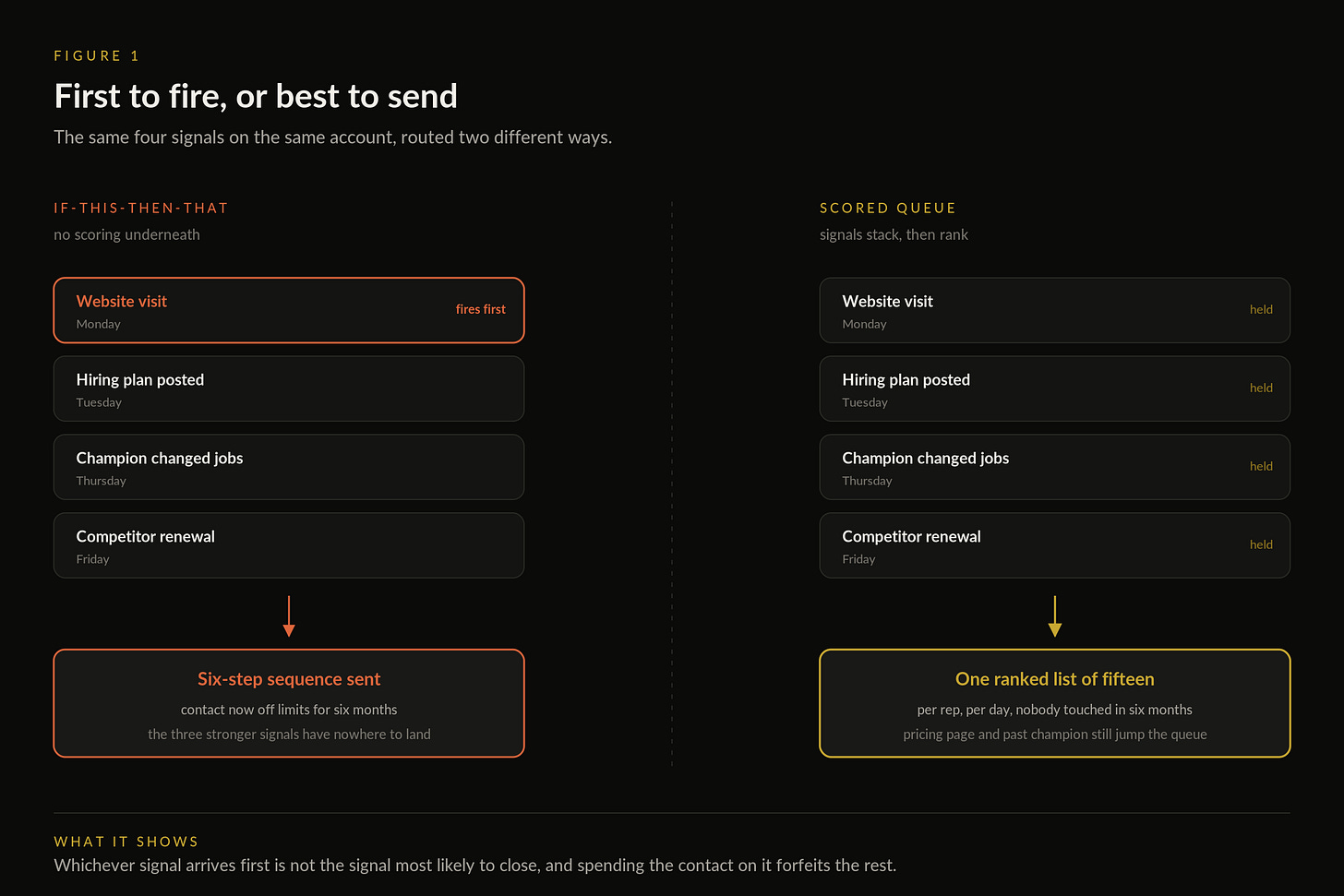 *Figure 1. Racing to act on the first signal burns the contact slot that a stronger signal would have used.*
3. Stacking signals beats picking signals, by a factor of nineteen.
Accounts carrying more than eight individual signals generate nineteen times the opportunities of accounts carrying one or two. That reframes the question most teams bring him. They want to know which signals to switch on, when the compounding sits in how many land on the same account and how they are scored together. It is also why he refuses to start a new customer on workflows, and starts on ICP definition instead. Kletzl will not name the signals behind his best customers’ motions, because at the top end it is no longer about any individual one.
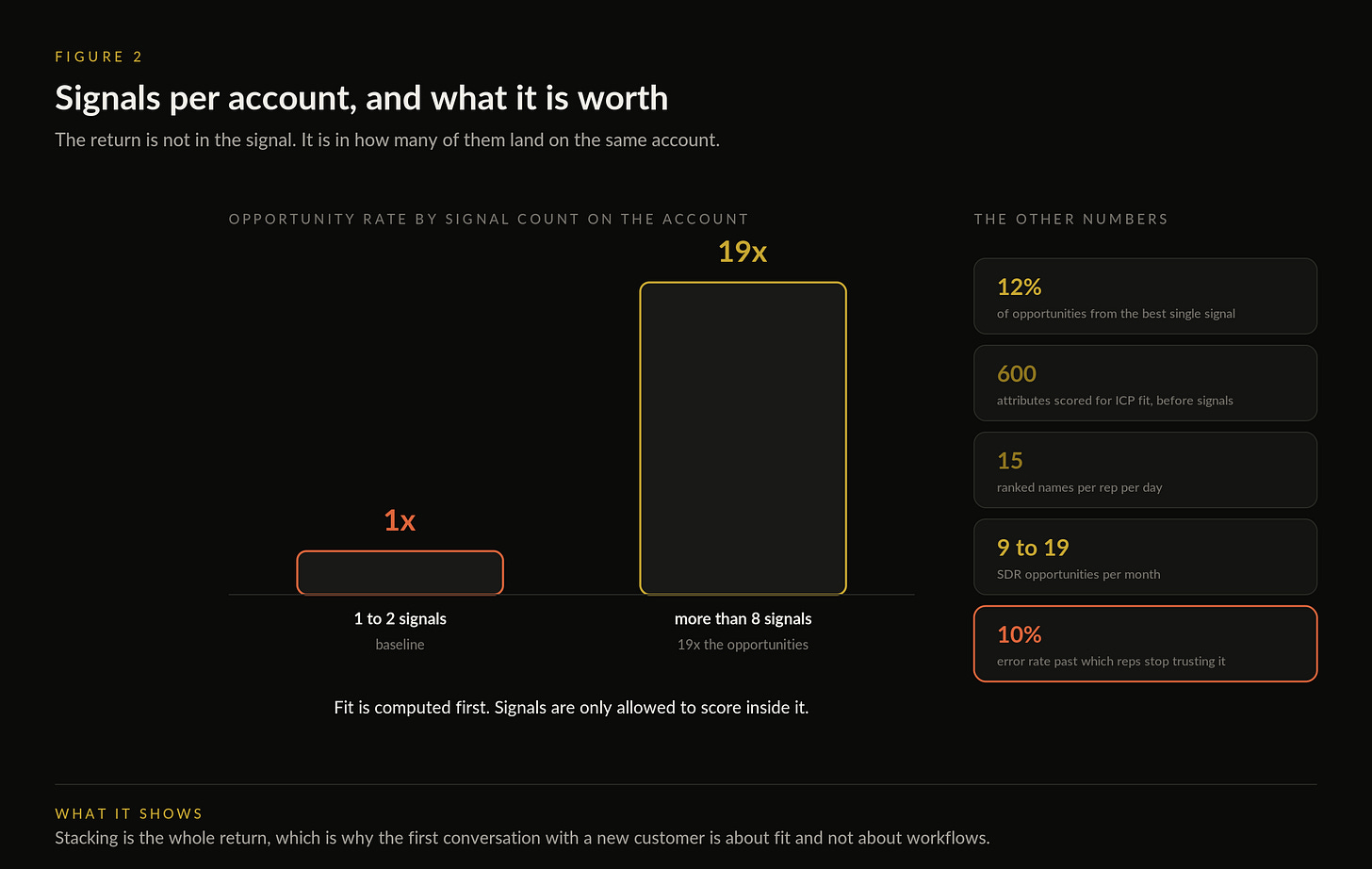 *Figure 2. Signal count on an account, not signal choice, is what moves opportunity volume.*
4. Data accuracy is the foundation, and the tolerance is ten percent.
Above a ten percent error rate, Kletzl says people stop trusting the motion, and no amount of coverage recovers it. That applies to every signal and not just job changes, because a website visitor with a stale title is a dead signal the same way a nine-month-old job change is. It is also his case against waterfall enrichment, which buys quantity at the cost of knowing whether any of it is right. UserGems would rather return nothing than return something wrong.
5. Going headless gives up the interface and keeps the outcome.
UserGems exposed the whole platform over MCP, including campaign setup, audience building, list uploads and persona creation, not just data export. Kletzl puts that in the middle of three phases: humans clicking through a browser, then humans directing AI, then AI tuning campaigns against its own results. He is comfortable losing the dashboard because the end user was never in it. The buyer was always buying opportunities generated, and ownership of the outcome does not move when ownership of the interface does.
Christian Kletzl
LinkedIn: https://www.linkedin.com/in/christiankletzl/
UserGems: https://www.usergems.com/
Rick Koleta (Host)
LinkedIn: https://www.linkedin.com/in/rickkoleta/
Newsletter: https://gtmvault.co/
GTM Vault
LinkedIn: https://www.linkedin.com/company/gtmvault
YouTube: https://www.youtube.com/@gtmvault?sub_confirmation=1
Website: https://gtmvault.co/
The GTM Vault Podcast - subscribe on your platform of choice
Subscribing on YouTube, Apple, or Spotify is what tells each platform to put the next episode in front of more operators, which is how the show keeps booking the guests worth an hour of your week.
Previous episodes include
See all previous episodes here: https://www.gtmvault.co/podcast
The GTM Vault Podcast is a breakdown of how high-growth companies design, test, and scale revenue architecture. Visit gtmvault.co for more episodes, the GTM Vault newsletter, Show Me Your Stack, and Coffee Walk, the on-location founder series that opens with Barbaros Ozbugutu in Istanbul.
Full transcript9,247 words · open to read or search
Full transcript of GTM Vault Podcast episode 53, lightly edited for readability: names and product names corrected. Speech is otherwise as spoken, and timestamps refer to the episode video.
[0:00] Christian Kletzl: If an account has more than eight individual signals, you generate 19x the opportunities than if an account has one or two signals. Champions on the move generates about 12% of opportunities. It's still only 12%, right? Which means there are 88% of opportunities that come from other sources. If you ask me like what's the number one mistake I see companies make, if this then that approach. I I get one signal and I take one action. Because there is no scoring and prioritization logic behind that, you take whatever is the first signal that fires and then you act based on it. What we try to do, what doesn't work, is we tell our SDRs and our AEs, by the way, like do this one more thing. But in reality, it's like the nineteenth or twentieth thing that we're asking them to do. And it's just impossible for humans. I want every single day across all of my accounts.
[0:57] Christian Kletzl: All of my prospects, rank them, select the best 15 based on all the signals today. And every rep gets 15 every day in their target accounts. We've only increased our sales team since we are using AI. We doubled the amount of opportunities generated by SDRs through using AI from like 9 to 19 per month. Because of this, we hired more SDRs. For me, it's revenue per employee. It's for me the full metric of like how well run is your organization.
[1:29] Rick Koleta: Welcome to GTM Vault. Every vendor in your inbox is selling you a signal, intent data, website visitors, hiring changes, champions on the move, and most teams that buy them end up with six dashboards, six definitions of a hot account, and reps who trust none of it. Christian Kletzl built his company on the single best signal in B2B, a past champion changing jobs. Then he spent this next several years learning why one signal, even the best one, was never going to be enough. In this episode of GTM Vault, the CEO of UserGems walks through the arc from one signal to a command center and what it takes to fuse many signals into one brain you're outbound and ABM can actually run on. Welcome to GTM Vault, trusted by 27,000 founders and operators building the future of revenue. This show has been circling one argument all year. Agents are only as good as the context and signals underneath them. Alex Bilmes made the case that
[2:43] Rick Koleta: From the buyer's seat. Gorish Aggarwal made it from the conversation layer. My guest today makes it from the signal layer. Christian Kletzl is the CEO and co-founder of UserGems, which he built with his twin brother Stefan, the CTO. UserGems started with job change tracking, following your customers and champions to the ne to their next company, and has since grown into what it now calls the AI command center for outbound and ABM. More than twenty native signal types, AI scoring across accounts and contacts, and an outbound agent called Gem-E that turns those signals into pipeline. The company has rained the company has raised over 22 million from craft ventures, battery ventures, tiger global, and Encore Capital. And this year it went headless, exposing the whole platform over MCP, so it runs inside Claude or any agent surface. Today's core question.
[3:39] Rick Koleta: When every vendor sells signals, does the moat sit in the signal, the fusion, or the la action layer on top? Christian, welcome to the show.
[3:48] Christian Kletzl: Awesome. Rick, really excited to be here. I big fan of the podcast, big fan of the newsletter. It's the one I read religiously every week. But the listeners, if you're not subscribed, go subscribe.
[3:58] Rick Koleta: Thanks so much, Christian. That that means a lot coming from you. So I wanna start off with take me back to the original insight. What was a champion changing jobs, the single worth building an entire company?
[4:10] Christian Kletzl: There's a long history of user gems or like the companies we started before and we did a few pivots. I always talk like Airbnb talks about the thousand days of pain. I talk about the fifteen hundred days of pain before we arrived at today's user gems. And for us we actually had a different startup. It was a hiring startup. And because of the hiring startup, we already were really good at collecting professional information about people. And one of our customers changed their job. And we just noticed that manually. And we tracked them down, contacted them at the new company, and turned them to a new customer immediately. And we thought, hey, this was super easy. And we already have a lot of the data. Could we build a product that actually does this at scale? Back then we were a small team, we were four people. So what we did is we we actually locked ourselves into like this small cabin in the Austrian Alps and said,
[5:02] Christian Kletzl: Let's wipe code this, wipe code back then, like actually real coding, and see if we can generate the product in like a week that that is actually solved out. And we we we had a target of like, can we identify job changes for like 66% of the LinkedIn profiles? I think we got to like 65%. So pretty close, but we developed that in a week. We very quickly got our very first customer and they paid us like $50,000, which was phenomenal back then. And so we very quickly knew all right. This is much easier to sell than whatever we had before. So this this seems to solve a need and then we just went all in on that.
[5:38] Rick Koleta: How could that one signal carry on its own? And where did customers first show you it sealed?
[5:43] Christian Kletzl: Yeah. I like what you said because I truly believe Champions on the Move is the most valuable signal. We have a lot of data, like we track across all the signals what generates the most opportunities. And we have found that Champions on the Move generates about twelve percent of opportunities. In in like and that's pretty much across all organizations. the good thing, I'll tell you the good and then the bad, like where where we saw the limits. The good thing is It actually scales with your company. There are very few signals that actually scale with you. But this one, as your company grows, as you get more users or more customers, then actually you have more top changes. And therefore that the twelve percent are actually quite consistent. The bad thing is that it's still only twelve percent, right? Which means there are eighty eight percent of opportunities that come from other sources. And if we're twelve percent of the opportunities, then
[6:35] Christian Kletzl: We are still something that like that that's really valuable, but we're not something that like let's say the RevOps feeder thinks about every day or the sales manager thinks about every day. So for us it was always like, what can we do in order to get from the twelve percent to kind of like about the fifty percent? Like if we look inbound outbound split and we're very focused on the outbound, actually now also on inbound, but very much on the outbound, then we want to get to about fifty percent of the opportunities. And so for us the question was always get from the twelve, which is great. But not what the CMO wakes up and thinks about to fifty per what the CMO, the CMO one hundred percent think about.
[7:09] Rick Koleta: You and Stefan are twins building together. What does that split look like in practice when a bet this size has to be made?
[7:16] Christian Kletzl: Yeah, it's it's actually a really funny story because originally so I'm the I'm the CEO, I specifically take care of sales marketing, operations, customer success and he's CTO, so engineering and product. But originally we obviously we studied together, but I studied engineering and he studied business and marketing. And so it's quite interesting that he is now the CTO and I'm the CEO. I I did do into the US from an MBA, but it's funny how these decisions are made. I was in the US. We were selling two US companies. He was in Austria and we had two engineers in Austria. So it was just it was just logically. Okay, I start with the selling, he starts working with engineers, and then the whole organization is built and and very clear roles. And I I I also was a product manager at Google before. So I'm still my heart is still at product. So we certainly have a whole lot of conversations all the time about.
[8:05] Rick Koleta: Walk me through the arc from one high intent signal to a command center that fuses many signals into one GTM brain. What was the moment you knew stacking signals was the product and not just the feature?
[8:17] Christian Kletzl: Yeah. Well I think the important thing about signals is like in a sense, why do they work or why do they matter in the sales process? Really what we try to identify is who is a potential prospect that has a pain that I can solve? Signals are really the proxy for that. For example, if If I'm hiring for a specific person, like I can I can look at the job posting and it says actually here would be what are your responsibilities? If let's say I'm hiring the first finance leader, then there's certainly implications on which tools I'm gonna need, which initiatives I'm gonna start. So it's really a proxy for the pain this company is trying to solve in the near future. Ultimately, like past champions is very similar. This person that worked at Company X, like we found something like eighty percent of people
[9:03] Christian Kletzl: stay in the same industry, 80% of people stay at the same company size. So you can assume that whatever they did in the previous role, they will do maybe with more responsibility, but very similarly at the next role. And so they will try to solve the same problems they solved at the previous company. Toss chain pins is really just a proxy for that. And ultimately, based on our finding that there is a signal that produces 12% of opportunities at the same time, like when we started like this 2020 area era and and later then we went up until twenty twenty it was all spray prey, right? It was like it was the the outreaches and the sales off to where it's like just add some volume and you get the opportunities. That started to crumble. Like I just had to be more intelligent. And for us it was if if there's one signal that can do it, there's certainly others that can be this proxy for pain. And then it's just about identifying what are actually the best signals here. And then obviously the the next issue then becomes how can I take this
[9:59] Christian Kletzl: and actually make it manageable because it turns into a whole lot of noise for the rep if if I'm sending them let's say a notification for everything that's happening.
[10:08] Rick Koleta: Yeah, I remember I wanna say around twenty twenty two or so, like when ABM software really was taking off. But this was a pre signal era. It was more based on, you know, the interactions that were happening, either on the blog, the website, I know some other digital asset. And those would be stacked up and and that for sales and marketing was already kind of one of the first times the convergence of these two departments was really important for for the motion to work effectively and and now comes, you know, the signal layer which makes the whole the whole motion a lot more effective. Fusing signals is easy to say and hard to build. Operationally, what happens when a job change, a website visit, A hiring spike hit the same account in the same week. Who or what decides what fired?
[11:02] Christian Kletzl: Yeah. And that's a really good question because I think if you asked me like what's the number one mistake I see companies make, it's actually exactly what you just described. Kind of like this if this then that approach. Where like w we see a lot, I think also especially with like let's say a clay, where with a clay it's very easy to do this if this then that, right? Like I I get one signal and I take one action. But because there is no in sense, scoring and prioritization logic behind that, you take whatever is the first signal that that that fires and then you act based on it. But oftentimes there's a limit to how often we can reach out to companies, how often we can reach out to people. Like if I reach out to the CMO today with let's say a six cents six step sequence, then that basically should be this person shouldn't be contacted for let's say the like next six months. So I'm I'm wasting potentially
[11:58] Christian Kletzl: better information that comes, let's say, next week or next month for this the signal that just fired. And so when when we think about how to orchestrate many signals, like in the first place, we need to understand that we went from an information poor era. Like I would say in the in the early twenties, it was we didn't have enough data or signals to make an and run an intelligent process. Now it's actually the opposite. We have so much information, whether it's like Let's say my gong call transcript from my close lost or my website visit or my interaction with the webinar or my product usage, like if I'm running PLG, all of that now feed feeds into Sage Force. But what what we try to do, what doesn't work, is we tell our SDRs and our AEs, by the way, like do this one more thing. Like now I also check what is the like how many PLG users do I have in this company before I reach out to the CTO.
[12:51] Christian Kletzl: But we think you were just asking them to do one more thing, but in reality, it's like the nineteenth or twentieth thing that we're asking them to do. And it's just impossible for humans. And so the good thing is that's actually where AI is really good at. But but coming back to your questions, we'll be very much focused on it shouldn't be an if this then that with a few exceptions. Like for example, if there's a past champion, it should be. If there's a website visit, it should be. Because these are these are really strong signals. But for the majority of signals, What we have found is that it's actually the combination of them that makes it valuable. And so like so many company, so many like every conversation I have, people are asking me, what are the top signals? What should I be activating? And we have the list. It's like past champions, closed last survive, it's the website visit, it's customer competitor on the account level, it's hiring plans. So there are there's a good list. But actually, what has far more impact is actually if you look at the accounts holistically. And we have found that if an account
[13:49] Christian Kletzl: has more than eight individual signals, you generate 19x the opportunities than if an account has one or two signals. So that's I think where we all go wrong with like we want to do the if this and that. But in reality, it's all about the scoring. Like when a company starts with us, I don't want to talk about individual signals and individual workflows. I talk about let's get the ICP definition right, the ICP fit, which is also a ranking, right? And and I can talk about this because we spend so much time on this. It's the ICT fit and then it's ultimately like people call it intent. It's it's intent is a weird word because it covers so many different things. But it's more kind of like the signal fit. Like where are they in the buying stage? And if you get this right, then everything else that follows is much easier. If you get this wrong, then you're just wasting a whole lot of time.
[14:38] Rick Koleta: Yeah, a lot of people just skip the foundational layer and want to get right into it, but it's like you it doesn't work like that. Absolutely. Signal based GTM is now the label every vendor wants. Define the difference between a team that stacks signals into one motion and a team that just bought six point.
[14:57] Christian Kletzl: Yeah. It it's really I mean the the six point tools are just ultimately something will break, whether it's the you're running it is a in an if this and that, and it will break. And you will have a a big part of go to market is actually like identity resolution as well. So coming back to this concept of I wanna stack the signals to understand like the scoring of the individual and of the company. And if you're doing it with different signals coming from different places without a good logic ultimately as the foundation, then then you just back to this if this and that. And the the smartest companies we've seen, they run it in a way where it's kind of like like we call it the brain concept. But the idea there's some triggers that should be done immediately. If let's say this is that they're visiting my pricing page or my comparison page, then I want to immediately reach out to them. If there's a past champion, I want to reach out immediately. But for the rest, I actually I want every single day
[15:56] Christian Kletzl: Across all of my accounts, all of my prospects, rank them, select the best fifteen based on all the signals today. And every rep gets fifteen every day in their target accounts. Because in a sense, that's what we would kind of ask them to do. If you tell them SDR what they should be doing is like, look at your book of business, select the very best people today and reach out to them. But that's what AI in a real command center can do really well. It's about here are everything I know about these accounts and and these people. And then I rank them every single day and then I take the top fifteen that have not been contacted in the last, let's say, six months, and that's the ones I go after.
[16:34] Rick Koleta: Your best customers run motions built on a dozen or more stacked signals. Walk me through one real anatomy, which signals and what order are driving what place.
[16:43] Christian Kletzl: the very best one, for the very best one, I cannot answer this question because it's not about the individual signal anymore. I can tell you what feeds into this go-to-market brain. We as mentioned, we start with the accounts and what we do there is the the very first thing. So we have we have a list of about twenty million accounts in our database, and we have about six hundred attributes for these accounts. And by attributes I mean what's the tech stack. What's their hiring pattern? What's their how's their sales team growing? How how much money did they raise? So we have about 600 factors. And what we do is we look into your existing customer base and figure out which of these 600 attributes do they have in common, way more than your non-customers, to figure out what actually matters. And then based on this, we generate the target list, basically the companies that look the most like your customer accounts. And we can do this for different products, we can do this for different ICPs.
[17:38] Christian Kletzl: But that's the starting point. So rank them based on how similar are they to my customers. And then then that's that's what we call the ICP fit. And then I I think six and started that concept of like ICP and then intent, where the second part is then the signals that flow into this calculation. So once I have I know who's my ICP, my next question then is who within this ICP is actually like in kind of like a buying motion, like showing signals that they're interested. That's where the signals come in. And so when you ask me which signals matter there, it's really the ones that I just mentioned. So we look a lot at the past champions, website visits, we look a lot at to to to look at talk about it in the category. Like we look at internal signals and external signals. And the internal signals are the ones where I have data on it.
[18:23] Christian Kletzl: that for a PLT company that could be how are how are they using my product. It's a lot about like engagement with my webinar or my newsletters, or I have some internal website visit information. Did they go to events? So that's my internal information. And then the external information, so that drives a lot of the the the the what we call like signal or intent. And then the external ones are these initiatives that we see. I really like to add a different different ones. Engagement with my advertising, that's a big one. where I see who's clicking. I also, if you're smart about job postings, you can go really far. Like what are they writing that they care about? And then the the last one is also if you see any signs on like LinkedIn postings, what do they care about? But in reality, these are the these are the most important ones. But really the idea is figuring out for your business. We look at what generated opportunities in the past. So we look at the signals that we set up and then we look at six weeks, two months
[19:21] Christian Kletzl: before an opportunity was created, how were these signals back then to figure out maybe for you, this one doesn't matter, but this one matters a lot and that's how they should be scored.
[19:30] Rick Koleta: In that case it sounds like this is only relevant post product market fit.
[19:35] Christian Kletzl: I user terms certainly. Like we are I think that the other tools for that. I think clay is a good one, like for for very fast experimentation. User terms is for you have you already know what you're doing, you know who you're selling to, and you wanna really want to scale the process. So we're very big on we we integrate really well into your Salesforce, including all of the engagement rules of like who reaches out when, who's your customer, who's your open up and what are different rules of engagement for if they are customers, if they're an open up. So it's very much for sophisticated go to market organizations.
[20:08] Rick Koleta: Got it. So in most cases we're looking at a series A and B. Wayne, what does the scoring layer actually do that a RevOps team with rules and sales for us cannot?
[20:12] Christian Kletzl: Yeah, I would think so. The answer here is also very similar to another question that I get a lot, which is why can't I do all of this in Claude? Because I could also do my scoring in Claude or And the answer, so in comparison to the standout successes we've seen in AI, for example, in coding, in Lingual, even in customer support, all you need is your own internal information for for coding, extremely sophisticated, right? But what it does is it looks into your own code database. It knows where this information is. And then it codes. For for go to market, and whether that's scoring or who to engage, I need my own internal data that's in many different places, but then I need a lot of ever changing external data. So when I talk about the the six hundred attributes of this is who are they hiring right now, what is their tech stack? Well as signals like let's say website visits or intent. All of this is just not readily available. Like you need to get that data from somewhere.
[21:19] Christian Kletzl: Which means you can never just do it yourself in your Salesforce. You need one or several providers to get this data in the first place. And then you might be able to to run your own scoring. I we have we have s in the first place, we provide that information out of the box. I think that's a huge differentiator. And that's just we have we have all the knowledge of what works for our customers, like how to fine-tune the scoring that we're convinced that. Because of this, our scoring is is s more sophisticated, more superior than what you can do with, for example, states for schools.
[21:52] Rick Koleta: Signals you send as a slack alert are rep ignored, Gem-E tur turns them into drafted outbound. Where exactly does the agent stop and the humans start today?
[22:03] Christian Kletzl: Yeah. E I'm smiling because in a sense this I don't know, rep fatigue or rep inaction is probably the number one thing we've we've worked on over the years. Because as a as a provider of data or signal, we can give you so much high valuable information, but if then nobody acts on it, it just dies silently in your Salesforce, for example, or in your SAC, as you said. And we've gone as far as so we analyze If we send you signals, notifications, emails, how many of these people ultimately, for example, have an activity? And we go as far as looking at not only do they have an activity, we look into how many activities? And because we have found that some people actually start sending an email, like they put them in a sequence, start sending an email, but actually they don't do the phone calls. And so we've seen that for some companies, they have this very weird where some reps are doing a really good job and they have seven touch points and others have two.
[22:59] Christian Kletzl: And turns out that like number three is the call that they're not doing. So it's really this this is the big thing. But coming back to your question. So I I talked about that it's really difficult for the rep to look at 1920, 25 different things to then decide who to contact. But AI is actually really good at this. And so we we have we strongly believe that you need to sell in the process. We have really, really strong sellers. We have only increased our sales team. since we're using AI, like we doubled the amount of opportunities generated by SDRs through through using AI from like nine to nineteen per month. And all this told me is SDRs actually went from a resource where it's like, I don't know how whether I can make this financially work to I want more of this. And we actually just hired like because of this we hired more SDRs. But for me, like what we do with Jamie is really understanding all of the signals, preparing a full sequence, including the call script,
[23:56] Christian Kletzl: the email, the LinkedIn, based on all of the signals it takes, the call transcripts, if if you have previous conversations. So really, really smart outreach. But typically we put it in front of the rep and we let the rep make the decision. What am I doing with this? And the decision could be I'm not sending it, the decision could be I'm sending it as it is, or because we show them here is here are all the signals we identified about this individual. Here's the email we generated. The rep can actually go in and make changes. And what we see is typically like we we store them as like ABCD accounts. For C accounts, we typically run it fully automatically. So we don't put SDR time on it. But for A accounts, if we're reaching out to a snowflake, I do want an SDR to review. And then ultimately it's also about making the phone calls, the LinkedIn interactions. Both of these, like phone calls you're not allowed to legally do, fortunately, using AI. And LinkedIn, we also don't do automatically. We do it human.
[24:50] Christian Kletzl: So for us, the the SDR is in there to review messaging for the A accounts and then do all the manual touches on like LinkedIn and phone calls. We we more than doubled or tripled our phone call capacity and we're seeing great success with phone calls.
[25:03] Rick Koleta: Yeah, and is there anything in the specific you can share that you've learned from the first cohorts of Gem-E pipeline about what agents write well and what do they still get wrong?
[25:15] Christian Kletzl: Yeah. my god. The first honestly the in general with AI SDRs that we've also seen it. Like there was a time where AI could write messaging, but it actually wasn't great, even if you fed it with a lot of the data. The f the first version of Jamie, we did a more manual approach where certain parts of the email were updated by AI while other parts were actually like hard-coded or or or written in. And that just proved to be impossible to manage. And I think there are still some providers that do it like this, but for us it was like because with so many signals, you need so many like if then, and then AI changes small parts, it actually, it actually turned into not great messaging. And that for us was like the first version of it. Iterated on it, there was actually like there's a distinct time, I think it was something like September last year, where AI messaging suddenly got
[26:10] Christian Kletzl: And we we see the difference before and after. Before we had we had a bunch of complaints of like this this sounds too robotic. And now customers are sending us like this is this is better than my SDR or they sending us the responses they get, like, this is the most well researched outreach email I've ever seen. And so there there was this time where AI is, as long as you feed it enough information, enough signals, it's actually really, really good.
[26:34] Rick Koleta: You exposed the platform over MCP so UserGems now runs inside Claude and other assistants. That gives up the dashboard. What convinced you that Agent Surface is where GTM work is moving?
[26:46] Christian Kletzl: Yeah. To me, it's actually the thing I'm most excited about. Because the way I the way I see it happening right now is so like basically until 2025, any SAS tool was humans clicking on the website. Right. I do all of the things on the website. Now with with our MCP, we are actually I would I would say we're going further than other organizations. Because like what you expect is or what you what you think in the first place from MCP is like I wanna, let's say, export my data or I want information on accounts and contacts. We go a step further. Anything that you can do in user terms, including like setup of campaigns, setup of audiences, uploading different lists, setting up persona, all of this you can do through the MCT. Because what we believe is that so the previous phase was humans doing it manually through clicking in the browser. The next phase is the current one, is humans using AI to generate the campaigns.
[27:39] Christian Kletzl: And the phase after that will be that AI can actually do it autonomously. Because if we give you all of the information, which campaigns work, what were the opportunities generated? What's the messaging that resonates based on the responses that we're seeing? Then AI can actually fine tune what are the campaigns I'm not running, what are the campaigns I should not be should should not be running. And so I believe that the MCP is essential for a kind of like self-optimizing AI that runs the campaigns. And we talked a lot about like sales campaigns, but for us it we strongly believe it needs to be orchestrated with marketing campaigns as well. And we're talking like this this could be inbound, this could be newsletters, but we we think a lot about like the advertising piece. So for us, anything, any account that we go after with the sales team immediately also gets advertising across
[28:30] Christian Kletzl: Google LinkedIn Meta. And so we believe like the the AI go to market can optimize both the sales campaigns and the marketing campaigns based on the results that it sees.
[28:39] Rick Koleta: When your product is a data and reasoning layer inside someone else's agent, what is left that the customer sees and values as user gems?
[28:48] Christian Kletzl: I the good thing here is that our whole tagline at all times was actually that we don't need the end user in the product. It was all we we had the managers, we had the rev ups in the product, but the end user just saw the outcome. For example, the person in the sequence, the the messaging generated. And so it was always like what we generated was prioritized accounting contacts, messaging. But ultimately it's opportunities generated. That's our job. And so this step Towards the MCP where we're not owning the interface really doesn't change too much for us because ultimately what we're really owning is the outcome of the opportunities. And so our buyer sees the opportunities generated. Our the end user sees the messages and the people prepared for them. It's less about that interface, like who owns the interface and more who owns the outcome.
[29:41] Rick Koleta: Talk a little bit about signal fatigue. The skeptics case. Intent data has overpromised for a decade, and when everyone acts on the same signals, the signals stop working. Why is this any different? Yes.
[29:54] Christian Kletzl: The most important thing that we need to define here in the first place is what is actually intent. Because I think there's this I would call it like misunderstanding, where intent and signals are being used synonymously. Where intent for me basically like the way I just like website visitor is people consuming information on your website versus intent, the way, for example, a sixth sense introduced it, is more people consuming information off. your web like outside of your website. So like reading articles, searching for stuff. That part is intent to me. That is an intent is one of the signals that we are using. The the disadvantage with intent, I mean the way Sixths does it, I have a whole lot of opinions on like being it mostly account focused and being a a complete black box of what signals actually mean. But intent by itself, as you said, the disadvantage is that
[30:48] Christian Kletzl: If I'm subscribed to let's say certain intent topics and my competitors subscribe to the same intent topics, then we're going after the same targets. And that's where it becomes less than useful, right? The way I think about signals is in the first place, which signals are unique to my comp which signals are signals that at the very same time my competitor cannot act on. And so we're coming back to that's why past champions work so well. But there but there are many more examples like Closed lost survive. And we've done closed lost survive for the last fifteen years, but now we're doing it with information about the call transcripts, the closed lost notes. So we can make it really intelligently. Where if they said, Hey, I don't have budget right now, we're hiring a CMO. Once I hired the CMO, then they should be having this conversation. That's information only I have. And it's a very intelligent way to combine, let's say, a new hire with closed lost information and
[31:41] Christian Kletzl: trigger the outreach. So if you think about which signals are unique to me, it's these two. It's anything on my website, anything that is first party. So product usage, anything related like what I have in my HubSpot or my keto. So when we talk about newsletters or events. So and customer competitor is a big one for me as well. It's actually the one I still listen to. Like if I got a message, hey your competitor as A B and C users and I don't, I'm like, all right, what am I missing? So there are a bunch of what I call bespoke signals that are unique to you. And they will continue to work as long as once again, like they're the proxy for the pain. And I want to add one more that we have seen a lot of usage and really good outcomes is we call it AI research. So it's really it's kind of like bespoke signals that companies create themselves on user terms. And so what this means is for example, let's say I'm a I'm a SOC two provider and I'm curious either are you already do you already have SOC two? If yes, who's your provider?
[32:37] Christian Kletzl: I can now create a research with these questions. AI goes out, analyzes it for all of my 10 or 50,000 target accounts and gives me an answer. And then I can go after these. And we've some seen really, really creative ways by companies to run these. Like going as far as any like there's government notices about companies that got fined. And I have a solution for that. So then There there are these signals that are unique to my business and and everyone has those, but they're different. And then there are the signals that are unique because I create them in the first place.
[33:13] Rick Koleta: You you mentioned that that after a company gets a CMO in most cases they'll start looking into a sophisticated GTM program like this. The so that you do need a CMO to run, I wanna say, such a sophisticated GTM motion. Wouldn't you agree what most of your customers or do you think a sales leader could run this as well? I
[33:36] Christian Kletzl: fully agree. Like I fully think that a sales leader can run this. Like if I think about who is the buyer for user terms, then I would say it's like fifty percent it's marketing, forty percent it's sales, and like 10% is wrap ups. But rep ups is always involved, but whether whether or not the budget comes from them. And if I look at who's implementing user terms, it's once again across the board all three departments. I think the that is not to say it's super easy because A sophisticated go-to-market motion needs, as I mentioned, like it needs to understand your ICP, it needs to understand your persona, it needs to understand where all the signals, and then it needs to prioritize, it needs to understand who's the rep that should act on this based on whether it's a customer, an open up, et cetera. So there are a bunch of rules involved. That's where like we just have a really strong customer success motion where some of our customers thought that our CSM actually works for them, like they're an employee of their company. Because like
[34:33] Christian Kletzl: It is it is sophisticated. We've got a really good process down where even for for public companies, we're life in the first months, for example.
[34:41] Rick Koleta: If the same twenty signals are available to every vendor, what stops the CRM incumbents or the model providers from absorbing the com command center the way they absorb everything else?
[34:53] Christian Kletzl: It's interesting because like I've heard this question since about 2020. Because like, hey, Sum info can do champion tracking. Why does user terms exist? And then it's like, all right, let me know as soon as they're good enough to do this. Because like the there are a lot of intricacies. Like the foundation for user terms, when you think about where we came from. So we came from champions on the move. What this required was really accurate. Data. If I gave you a job change that happened nine months ago, or I don't tell you that this person changed for nine months because that's when I get that data, or I give you a completely wrong one, I can tell you that if if the error rate is higher than 10%, people stop trusting the motion. But our our foundation has always been data accuracy. And I know that you talked about waterfalls in a previous interview. I have a very strong opinion about waterfalls just being kind of like
[35:47] Christian Kletzl: You you you don't you get a whole lot of quantity at the cost of quality because ultimately what you're getting, you're getting all the all the data from all the providers where you never know whether they're accurate or not. At user terms, we had to build our own process because no one was accurate enough. And so we any sick and the the important thing is that doesn't just apply to past champions. It applies to every signal. The website visitor. If the data is outdated and the person is already at a new company or they have a different title, then it's a useless signal and I stop trusting. So for us, the argument for why you need a command center, it's kind of it's for us first it's data accuracy of every signal. And then it's actually like it's very easy to say I have dozens of integrations or I have dozens of signals. It's a whole different beast to actually get them in a way where they talk to each other.
[36:40] Christian Kletzl: where you find all the edge cases. With user terms, you sign up and we've we thought, I can guarantee you, we've thought about all the edge cases and we'd rather not give you information than give you wrong information. And I think that's why we've seen like there were a whole lot of like let's say the AI SDRs that thought this is an easy topic to tackle because as you said, like I have data providers, I have signal providers, I just combine them in my database. That's that's the AG2 rule where the twenty percent that really matter are a lot of work and not something that that you can just start and develop.
[37:15] Rick Koleta: Publisher pricing while most of the category still hides it behind demos. What forced that decision and what changed after?
[37:23] Christian Kletzl: Mm-hmm. So I told you, I told you, we are more for established sales teams or sophisticated sales teams that want to scale. We're not for this like two-person company that that that wants to to basically identify who could be my buyer, like that needs to find product market fit. And because of this, I would say we're not purposefully. We've never been the cheapest solution in the market. We're not competing on price. We're competing on quality and and on outcomes ultimately. We believe that With user terms you can generate more opportunities than with other solutions. Because of that, because our competit our we if we ask I I I'm a big fan of self selecting out. Like if if say a a forty K contract is not something you can afford right now, which is our our lowest tier, like then I think you should go to a different solution until you're in a place where you can afford it. Where like where you have, let's say, ten sellers and you know that making them fifty percent more productive means
[38:20] Christian Kletzl: that you pay the let's say sixty K but you're getting two million in return. And so for us it's a really good way to have actually find the ones that are serious.
[38:28] Rick Koleta: What has capital discipline meant here? What did you say no to that competitors with bigger raises said yes to?
[38:35] Christian Kletzl: I think it helped us create a much healthier organization. The and so when I what did I say no to? Just hiring like a maniac, followed by firing like a maniac, which we've seen a whole lot in like 23, 24. Like we have a really strong team. And the reason for this is like we hire very, very slowly and thoughtfully. And then we make sure people are happy here. And then we make sure that there isn't like The next layoff looming over their heads. And because of this, our our ICs have been with us for three or more years, our managers for five years. Like people just stay a long time. And because of this, they're so much more productive. Like the person that has been with user gems for three years is so much better at their job than the one that has been for six months. Interestingly, I I see this not only for that reason as a competitive advantage. Like I can run a much leaner team than my competitors.
[39:32] Christian Kletzl: But we've actually won deals because our, for example, customer success team has been with us for for several years. They know exactly what they're doing. We have a competitor where the longest customer success manager has been with the team for seven months. This tells me they don't know the ins and outs of the product. It also tells me that it's highly likely that during my engagement, like the next year, I get one or two new customer success managers. That's not the case with user chance. We I told you our CS team is incredibly strong. We get messages pretty much daily of like, this person is fantastic. And so the no has always been we're not hiring like crazy so that we don't have to fire like crazy. I'd rather not hire than hire the wrong person.
[40:18] Rick Koleta: Paint outbound in twenty twenty eight. What does a rub actually do all day when the command center reads the signals and the agent writes the touches? I mean
[40:26] Christian Kletzl: And the whole goal has always been, and I think this was also in in one of your conversations, what's the percentage of actual customer facing conversations that a rep is doing? Fortunately, this part you cannot replace with AI. Humans still buy from humans. So if we talk about like if you talk about the SDR, I think it's it's phone calls, LinkedIn interactions. It's creating your own content on LinkedIn. Like I've we've seen really, really strong SDRs that actually became content creators because it's about showcasing who you are and attracting the right people. So this this whole like selecting accounts and trying to find this one signal that works has never been what we paid them to do. We paid them to actually have the conversation. And really the goal is like for the SDRs, it's it's more calls, more LinkedIn interactions, like better, more like
[41:19] Christian Kletzl: If I get questions about like inbound or outbound responses, that that I can take care of those. And then for the seller, like for the AE, very, very similar, where it's about I want I want a hundred percent of their time to be focused on customer conversations. I don't want them to spend much time on the manual work of sales that actually doesn't deliver the outcomes.
[41:42] Rick Koleta: What has to be true in eighteen months for the command center bet to be provably right and what result would tell you if
[41:48] Christian Kletzl: was wrong. Wrong. Like we evaluate every let's say new functionality we launch, even something like a JMA, we evaluate on like responses. But ultimately the number one thing, like it's close one, but that's too long, it's opportunity generation. And so a wrong would be if opportunity generation goes down. If, for example, like the the whole way of generating pipeline changes, which I'm still not seeing. But the the wrong is it's not it's not doing its job. Which is generating opportunities. for to be right, I think I want to see a lot where we see AI identifying what are the campaigns I should be running based on the understanding of all the data, all the all the product I have, all the communication I have, self-optimizing pipeline, I think is the provably right.
[42:42] Rick Koleta: Alright Christian, I wanna move on to the rapid fire section of the pod. In one sentence, first instinct. One GTM metric that deserves more attention this year.
[42:51] Christian Kletzl: Yeah. Because you say first thought first thought is actually not GTM, it's because I'm the CEO, it's like it's the whole organization. And for me it's revenue per employee. It's for me the full metric of like how well run is your organization.
[43:05] Rick Koleta: Totally agreed, by the way. The most overrated signal B T V
[43:10] Christian Kletzl: There is there is one such a clear answer and it's account level intent, which for whatever reason like the sixth and the demand base managed to turn this into like the one thing that matters. And to me it's the one thing that matters the least.
[43:27] Rick Koleta: One thing a founder should delete from their sales stack today. Got a lot of those transcription trucks transcription software. Everyone's got their own nowadays, right?
[43:39] Christian Kletzl: Yeah, I think this is more about like standardizing them. I would say like as a founder in GoToMarket, maybe not delete, but watch really, really closely for me is how your team generates their own applications. What keeps me up at night? Like everyone's now like bytecoding. And it's actually awesome. We looked into who committed the most code this year in our organization. And it's our customer success leader, not our engineers. But what keeps me up is when we started this whole thing, there was so much information like published on the web without security. So I would say like delete all the public applications you have right now and start from scratch with a process of you need to go through a firewall, you you need to have a VPN. Only through the V PN you can access this information. It needs to be password protected. Like we have a whole process and it makes this heat better.
[44:33] Rick Koleta: He is
[44:36] Christian Kletzl: Very good at saying no. And I actually talk about how as a as a original as a like I was a product manager, like the thing we learn is to say no because it's so easy. Like it's super easy to say yes. It's really difficult to say no because it actually requires prioritization. And actually, I talk about how we learned this as product managers over the last 10 years, and I think we got decent at it. But now because of all the bybecoding, suddenly everyone is actually a product manager. So I actually believe it's a skill now everyone has to learn to say no to the project because it's so easy to say yes to everything. So I think this it's no until it's a strong yes.
[45:16] Rick Koleta: Complete the sentence. In three years outbound is for And one last question Who runs the best GTM stack you've ever seen?
[45:19] Christian Kletzl: Self optimizing. Right, let me think. So I don't want to do the typical thing where I just mention of our customers and then say they run the best one because they have user terms. What advice? I don't have all the details. Like I actually I think I evaluate less about the go to market stack and more about who are the people running it. I've I've talked to so so many organizations and I think the it's still immediately obvious if someone is actually really good at what they're doing. And to think I think One of one of the organizations that I've seen that is just maniacally focused on getting an edge over the competition is Ramp. Like you see it all over LinkedIn, like all the messages. And I've I've seen comments on that. Like I now get like our catch all gets a whole lot of really bad messages from Ramp. So the question is where are they now? But I think when I talked to the team, they were just maniacally focused on like what is the edge we can generate. And ultimately I think you need that maniacally focused to to get the outcomes in your market.
[46:24] Rick Koleta: Christian, thank you. From one signal to a command center, from a dashboard to a headless brain running inside the agents. User gems is a live answer to the question this show keeps asking. Where does the intelligence and our revenue stack live? If this episode sharpened your GTM lens, subscribe to GTM Vault, share with your team, and come back next week. This is GTM Vault, build systems, not noise. Five GTM takeaways. One signal, even the best one, has a ceiling. The motion is in the stack. Two, fusion beats collection. Six-point tools is not a signal strategy. Three, the action layer is where signals die or convert. An alert nobody acts on is decoration. Four, headless is a distribution bet. The platform goes to where the agent works. Five, when everyone has the same signals, execution, speed, and orchestration become the moat. Alright, awesome.