Library/GTM Vault Podcast 52
You Have No Relationship With the AI
Ariel Hitron, co-founder and CEO at Second Nature
GTM Vault is a breakdown of how high-growth companies design, test, and scale revenue architecture. 27,000+ operators read it. Join them.
Every vendor in revenue AI is pointed the same way. Automate the seller, draft the outbound, hand the follow-up to an agent. Which leaves a question nobody on that side of the market is funded to answer: what happens to the conversations an agent does not get to take, and who is responsible for making the humans in them better. Ariel Hitron has been running the other way since 2019, building AI that plays the buyer so the seller gets better. The co-founder and CEO of Second Nature joins GTM Vault for episode 52 to explain why an enterprise buyer signing off on a large number is not buying capability, where he draws the line between an agent conversation and a human one, and why the training product was only ever the wedge.
About Second Nature
Second Nature builds a data model of a company’s sales playbook out of its recorded calls, collateral, scripts and CRM stage criteria, then generates AI roleplays that let reps practice against it and scores them afterwards against that company’s own criteria, in more than twenty languages. It was founded in 2019 by Ariel Hitron, who helped scale Kaltura from startup to global business, and Alon Shalita, a former lead engineer at Facebook, and runs out of New York. Its customers include Zoom, Oracle, Adobe, Teleperformance and Check Point, and the company reports sales up more than twenty percent after an average of thirty minutes of practice per trainee, with onboarding at some accounts cut by three weeks off a nine week process. Second Nature has raised $38M in total, including a $22M Series B in October 2025 led by Sienna VC with Bright Pixel, StageOne Ventures, Cardumen, Signals VC and Zoom, which is also a customer.
Watch or listen now across YouTube, Apple Podcasts, and Spotify
Download the transcript
Episode highlights
(0:00) Who Do You Hold Accountable When It Breaks
(1:38) The Category Automates the Seller. He Went the Other Way
(5:07) 2019, Before ChatGPT, and the Objection Every Enterprise Gave
(7:33) Digitizing the Playbook Into One Machine-Readable Model
(9:35) What the Scoring Layer Catches That a Manager Misses
(13:22) Which Conversations Should Go to an Agent, and Which Never
(19:18) Bundling, Unbundling, and Why Enterprises Unbundle Upward
(24:53) From Roleplay to Agentic Sales
(30:49) Demos Are Free. Maintenance Is the Moat
(38:24) The 2028 Revenue Org and the Test That Would Prove Him Wrong
 *Ariel Hitron and Rick Koleta recording GTM 52.*
What you’ll learn:
- Why an enterprise buyer approving fifty thousand or five hundred thousand dollars is buying accountability, which an agent has none of
- The two variables that draw the human line: size of the investment and how far the product sits from a commodity
- Why personality and preference is a third factor he names, and pointedly does not rank against the other two
- A playbook lives in four places at once, and none of them can be trained against until it is compiled into one model
- The machine does not beat a sales manager on judgment, it beats them on patience across a seven-parameter scorecard
- Building a hostile buyer is trivial, and the silent one is the hardest to sit across from
- Why enterprises are unbundling their enablement suite upward, buying the one capability the platform layer has not absorbed
- Demos are free and maintenance is the moat: what happens to every in-house roleplay build after the hackathon
- Why large competitors shipping roleplay as a feature made the sale easier rather than harder, and what he had to stop arguing
- The falsifiable test, on a clock: if the sales workforce shrinks, he was wrong
Key takeaways
1. Enterprise buyers are not buying capability. They are buying someone to answer the phone when it breaks.
Ariel gives away the whole capability argument without a fight. An agent can run discovery, ask the questions, solution, and put a proposal in front of you. What it cannot do is absorb the consequence, and a buyer signing off on fifty thousand or five hundred thousand dollars has put their own standing inside the company on the line to do it.
2. Two variables draw the human line, and a third one he names without ranking.
Size of the investment, and how far the product sits from a commodity. He puts the first threshold somewhere between ten and fifty thousand dollars, and the second at the gap between restocking something you have bought before and deploying a system nobody in the market can vouch for yet. Toilet paper goes to a bot and a new ERP does not, and the third factor he names is personality and preference, which he leaves unranked against the other two.
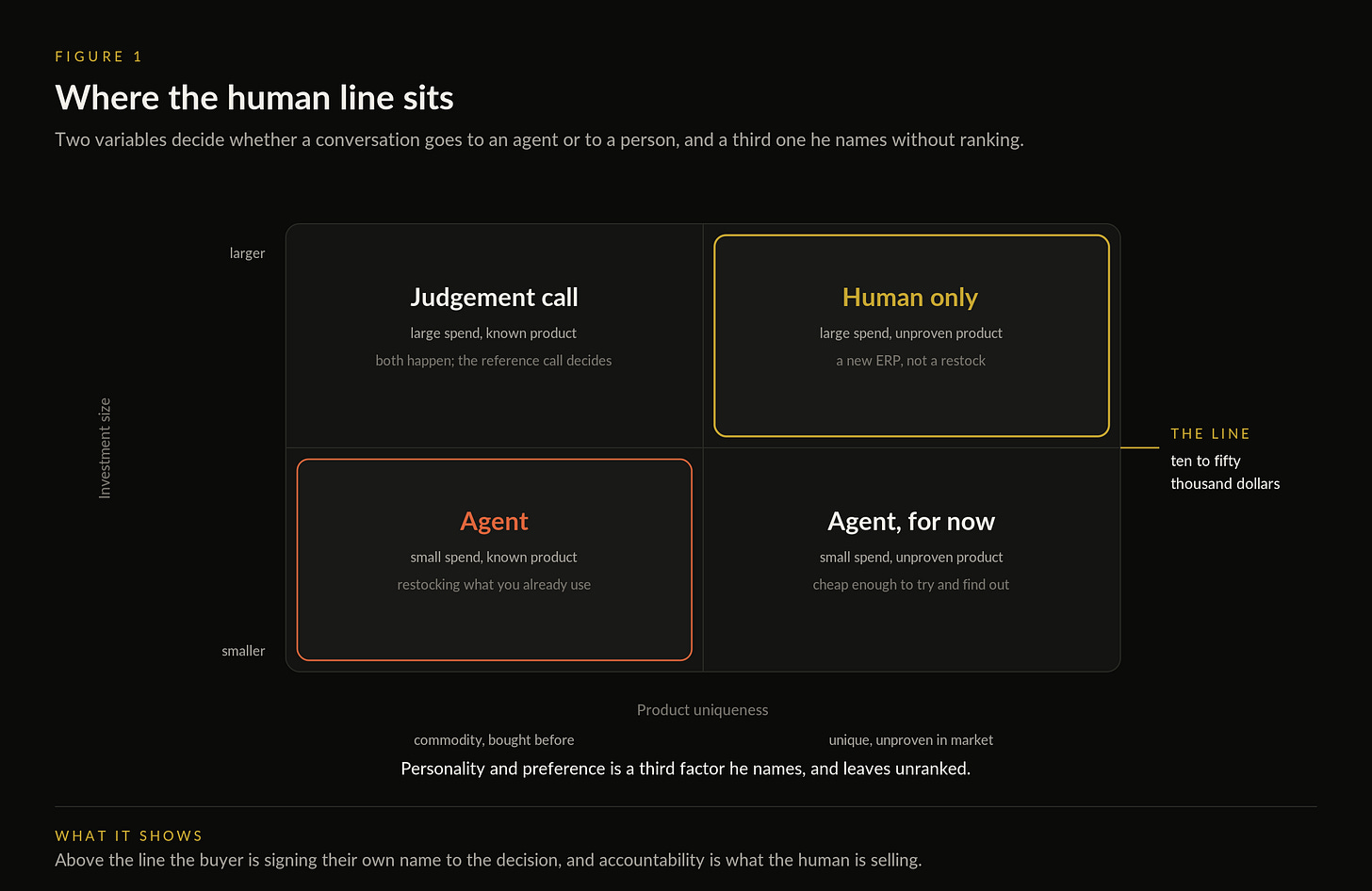 *Figure 1. The line is a decision your competitors are making deliberately and you are making by default.*
3. A playbook you have not compiled cannot be trained against, by an agent or a new hire.
The playbook is real and it is scattered across four surfaces: product marketing decks, tribal knowledge sitting in reps’ heads, recorded live calls, and the stage entry and exit criteria in the CRM. Second Nature’s job is to consolidate all of it into one machine-readable model of how that specific company sells. Every org runs its own mutation of MEDDPICC or SPIN, so the named methodology tells you almost nothing about the process that survives contact.
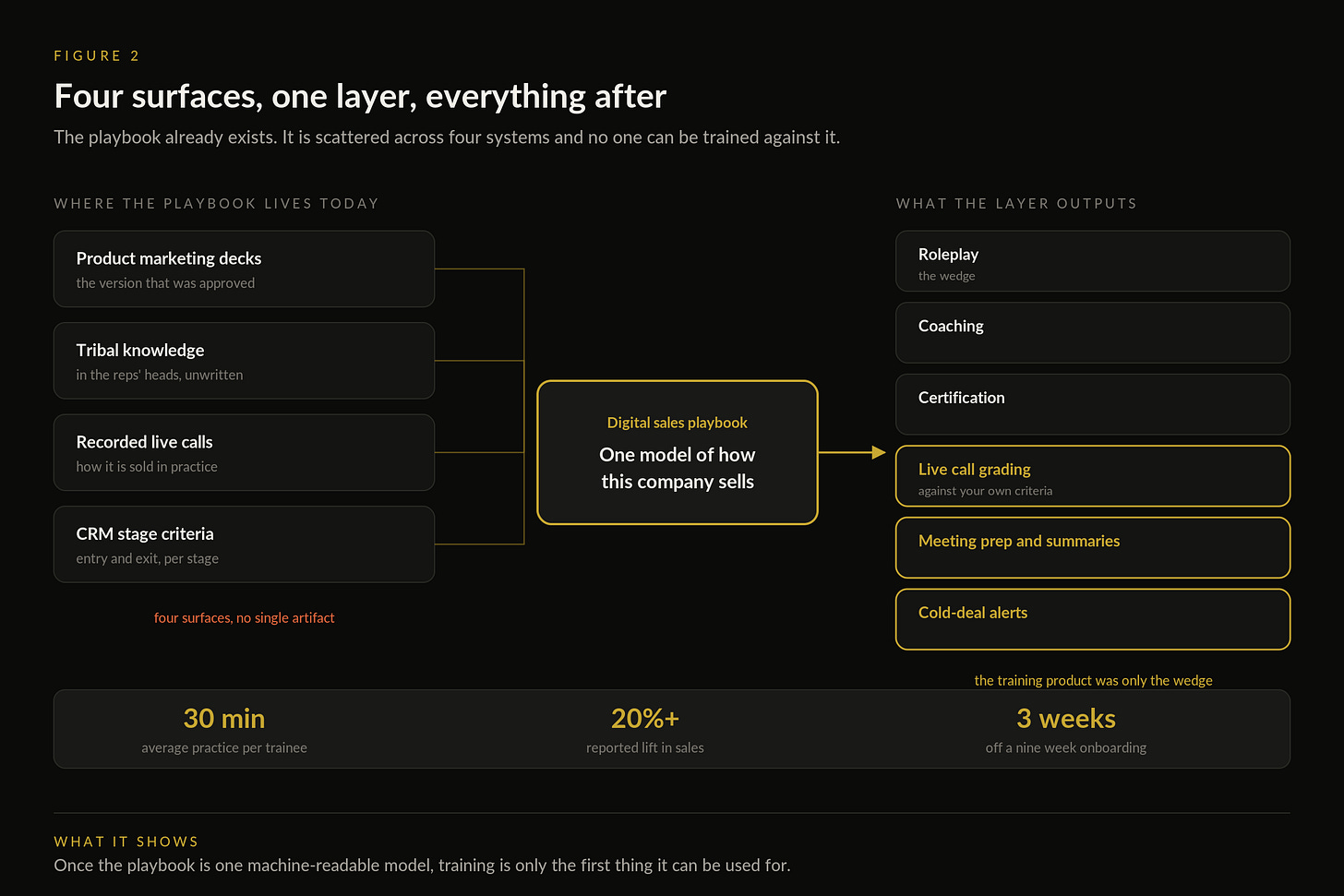 *Figure 2. The training product was the wedge that forced the layer to exist, and the layer is what everything after it runs on.*
4. The scoring layer does not beat a manager on judgment. It beats them on patience.
Humans read the room, catch the nuance, and bring everything they have seen before into the call. What they do not do is walk a seven-parameter scorecard, call by call, rep by rep, and justify each score. Ariel’s framing is that sales leaders are not accountants, so the feedback that lands is that you were not convincing, not exciting, not bringing energy, which is true and unusable, and the machine advantage is consistency rather than insight.
5. Demos are free. Maintenance is the moat, and it is why the in-house build decays.
The pattern repeats across enterprises: a hackathon, an internal team, a working prototype, then decay. The builders return to their day jobs, the voices go stale, credits run out, access controls are wrong, and nothing consolidates the data. Every layer underneath moves fast enough, from the models to speech to text to the agent harnesses, that maintaining it becomes irrational for anyone whose job is not this.
Ariel Hitron
- LinkedIn: https://www.linkedin.com/in/arielhitron/
- Second Nature: https://www.secondnature.ai
Rick Koleta (Host)
- LinkedIn: https://www.linkedin.com/in/rickkoleta/
- Newsletter: https://gtmvault.co/
GTM Vault
- LinkedIn: https://www.linkedin.com/company/gtmvault
- YouTube: https://www.youtube.com/@gtmvault?sub_confirmation=1
- Website: https://gtmvault.co/
Previous episodes include
See all previous episodes here.
The GTM Vault Podcast is a breakdown of how high-growth companies design, test, and scale revenue architecture. Visit gtmvault.co for more episodes, the GTM Vault newsletter, and Show Me Your Stack.
Full transcript
Full transcript of GTM Vault Podcast episode 52, lightly edited for readability: names and product names corrected. Speech is otherwise as spoken, and timestamps refer to the recording.
[0:00] Rick Koleta: Human sales conversations shrink every year. Does the training market shrink with it?
[0:06] Ariel Hitron: I don't agree with your assumption. I don't see sales population decline. Both sellers and buyer are coming much more prepared. They got their summary from their agent to do a lot of the groundwork. But on the flip side, trust is still a very rare commodity. Even if an AI can do the most amazing job, if it's something that I'm gonna invest a lot of money in, who do you hold accountable when shit hit the fan? If you're an enterprise buyer, you put your neck on the line each time you make a purchase. You need to have the trust on the other end. Humans are great in understanding what is the most important thing. They're great in reading nuances, but AI is great in being patient, being diligent, being consistent. That's very hard for humans. AI can help you practice, get better, try different scenarios without the risk of exposing yourself in front of a client. So the more scale you have, the bigger cost is not the tool, but the time of your people.
[1:05] Rick Koleta: Yeah, and what result say in eighteen months would tell you that this bet was wrong?
[1:11] Ariel Hitron: we'll see that the size of the sales force globally has declined, it means that I was
[1:16] Rick Koleta: I'll hold you to it. I'll definitely circle back in eighteen months to see who's right. Let's Welcome to GTM Vault.
[1:22] Ariel Hitron: No.
[1:38] Rick Koleta: The entire revenue AI category is racing in one direction. Automate the seller. AI SDRs, auto drafted outbound, agents that run the follow up. Ariel Hitron has spent eight years running the other way. His company, Second Nature, builds AI that plays the buyer, so the human on the other side of the table gets better at the one part of the job nobody has automated. The conversation where trust gets built is or lost. In this episode of GTM Vault, the CEO of Second Nature makes the case that as agents take over the admin, every human conversation left in the funnel gets more valuable, not less. And he explains why the company that invented AI roleplay is now moving into agentic sales itself. Welcome to GTM Vault, trusted by 27,000 plus founders and operators building the future of revenue. This show has spent the past year on one side of an argument, the context layers, the signals, the agents. Gorish Aggarwal made the case that agents are only as good as the context underneath them. Today we look at the other half of the stack that almost nobody talks about. The humans still in the loop and whether anyone is making them better. Ariel Hitron is a co founder and CEO of Second Nature. Before that he ran global sales teams as a VP at Kaltura where he built the playbooks and ran the trainings himself. In 2018, he founded Second Nature with Alon Shalita, a former Facebook lead engineer, on a claim that sounded absurd at the time. An AI could play a prospect convincingly enough to train a salesperson. Adobe Zoom Oracle Last October the company closed a 22 million Series B led by Sienna VC with Zoom on the cap table. To future proof sales and service teams for the AI year. And as of this month, Ariel is teasing the next act, moving from roleplay into agentic sales. Today's core question is stacked full of agents. What is the human still for? And who is responsible for making that human excellent? Ariel, welcome to the show.
[3:48] Ariel Hitron: Thank you. Excited to be here. One small direction though we we actually started twenty nineteen, Incorporated, but it's been a long time either way. So
[3:56] Rick Koleta: Okay, good to know. You built the trainings yourself at Kaltura. What kept failing? Well
[4:02] Ariel Hitron: Kaltura was was funny, it's like a different era, right? So pre AI, pre all of that, and I personally moved from a product leadership role to a sales role. So I'm a product leader and I think that sales is so easy. You have the spec, you have the brief, you have the product features, and you can just read them out loud to the prospect and they would just buy, right? That's my notion. Then I get a twenty five people sales team and I found out the opposite is true. Nobody cares about your product, nobody cares about your features. And it's all about the dynamics of how do you get their attention, how do you understand their needs, how do you able to cater to them. And that was kind of an insightful moment for me. I went on leading that sales team and kind of building the playbook from a very engineering perspective and thinking about like how I would approach it, but also the humility to understand that Saves is hard. And there's a lot there that goes that is not scripted, not written, and much more nuanced than writing a perfect prompt. So I think those were the realizations of the time.
[5:07] Rick Koleta: So twenty eighteen or as as as you corrected me, two thousand nineteen, right? And AI plays the prospect. What did the first buyers refuse to believe and when did the simulation cross the line? So
[5:22] Ariel Hitron: Going back down the memory lane, right? When we invented this space, Alexa was the most sophisticated piece of technology ever. ChatGPT was not in existence. Chatbots were done. Nobody believed they would work. Nobody would believe that they would speak to a computer or an AI. And the whole thing seemed like it was crazy. So I think that the key part that was hard for people to believe is they said, Well, that's a great idea, but it's not for me. It's great for like SDRs, it's great for the call centers, it's not for me. We're doing at SAP very complex enterprise sales, not for us. Right. So that was the initial response that we've gotten from everyone, essentially. And we started off again in twenty nineteen with the with SAP and with enterprise buyers as such that we're kind of forward indeed only a few individuals that are forward looking. You say, okay. It's not perfect. It doesn't really sound like a human at that point. But it really helps you practice and get feedback and and run the emotions without the risk of exposing yourself in in front of a client. So I think the mental jump was that it's it's better than just practicing in front of the mirror. 'Cause it gives you some feedback, gives you analysis, it gives you kind of feedback that was like back then.
[6:42] Rick Koleta: Yeah, but that that far back, AI wasn't there yet. You know, people's perception and I wanna say validation or acceptance of it was it was still too early, wasn't it? No.
[6:55] Ariel Hitron: A hundred percent. Like a lot of my co-founder came from Facebook and we built our own models, we did our own thing, we kind of built everything in house. There was no chat GPT at the time. Open AI was still j doing kind of I wanna say open platform and kind of save the world kind of thesis. It was very different. And I think that we came with the same idea that is now leading this kind of industry or category. Which is AI can help you practice, get better, try different scenarios and so on and so forth. Both for large enterprise complex sales as well as very transactional SDR calls and anything in between. So
[7:33] Rick Koleta: Let's dig a little deeper into that. New enterprise customer science. All right. What do you ingest and how does it become a buyer rep? How does it become a buyer a rep can argue with?
[7:44] Ariel Hitron: Sure. So think that also evolved over the years. But if you think about today, essentially we digitize the entire playbook. So sales organization has a playbook. This playbook is written in different places. There's some of it in in decks that product marketing wrote. There's some of it in collective knowledge within the reps. There's some of it that is recorded in live calls. There's some of it that is inside Salesforce with the entry criteria, extra criteria for stages. There's some of it like all over the place. And if you want to do proper training, coaching, certification, each one of them is slightly different, you need to digitize the entire thing so that the agents would know exactly how you sell. Because the way that you sell and the way that someone else sells is not exactly the same. Process is different, questions are different, objections are different, the stages are different. Even if you all use MedPick or spin selling or corporate vision or whatever you're using, it's still different and everyone is unique. So we create a complete digital sales playbook. That mimics the entire sales process of the organization. And based on that, we can create role plays, coaching, certifications.
[8:50] Rick Koleta: How do make the simulation harder than reality? The stonewaller, the buyer who won't talk, those personas.
[8:57] Ariel Hitron: It's not hard to make a simulation hard. Like you can create them to be hard enough. They can be really persistent. They can be really silent. You know, we're in sales, all of us. The I think the hardest ones are the ones that speak the least. So okay and And and that alone puts shivers down your spine, right, as a seller. So it's it's not very hard to make it hard. I think the the key challenges are how do you know it actually makes seller better? Like how do you know that it actually makes the case and helps them and they then become more productive?
[9:35] Rick Koleta: What does the scoring layer catch that a manager listening to the same call misses? What does the scoring layer catch that a manager listening to the same call misses?
[9:45] Ariel Hitron: Well, does the manager listen to sales calls though?
[9:50] Ariel Hitron: Many of those goals is the actual listening into. So now jokes aside, I think that humans are great in understanding what is the most important thing. They're great in reading nuances, they're great in reading the room, they're great in bringing their entire knowledge from previous places in AI is great in being systematically or computers. Being patient, being diligent, being consistent, that's very hard for humans. So th especially sales leaders, like People who love sales, they're typically not your kind of a accountants that go in with a scorecard and go one by one and one by one. They look like you weren't convinced, you weren't exciting, you weren't giving any energy in this, right? Which is an important feedback, but it doesn't go through the entire list of things and rank you in a very systematic way. And I think that that's something that AI does so much better. And then giving you the level of feedback that it gives and the level of justification. Just takes a long time to do that for a human and very few people bother go all down that route. What typically we see managers doing is say, look, like listen to me now on this call and you'll see how it's actually done. Right? Nobody takes like a time and say, okay, I have a seven different parameters scorecard and I'll score you on all of them and give you detailed feedback.
[11:09] Rick Koleta: It yeah. Let's move on to training humans in the agent era. This show spent a year in companies automating the seller. Your bet is the opposite. What can you make the case?
[11:21] Ariel Hitron: Sure. I think that the world of sales is vast and we just order pizza to the office. Is that a sale? Maybe. Not our typical sales motion though, right? Like ordering a pizza to the office is something I would definitely automate. Would not wanna have a person on the phone calling him and so on and so forth. But if it's something that's substantial, if it's something that is complex, if it's something that is not cookie cutter. If it's something that I'm gonna invest a lot of money in, yeah, I wanna speak with the human. And the reason for that is that even if an AI can do the most amazing job within the sales process, he can run discovery, he can ask you questions, he can solution with you, he can offer a solution and so on and so forth, right? Who do you hold accountable when the shit hit the fan? Who do you call when the this thing that was promised doesn't work as you expected? You call the AI, you have no relationship with the AI. If you're an enterprise buyer, you put your neck on the line each time you make a purchase. Any purchase, like you you're making an investment, half a million dollars, a million dollars, six hundred thousand dollars, a hundred thousand dollars, fifty thousand dollars, whatever. You have to get approval for that, you have to get real money for that. What if it doesn't work? It reflects so poorly on you. Who do you call? Who do you trust? The AI? Not really.
[12:44] Rick Koleta: Yeah, that's a good point. Enterprise sales, lawnware sales, complex sales cycles where multiple stakeholders are involved, they're always gonna require
[12:54] Ariel Hitron: I don't know, like I would never say always, like you'd never know what would happen, right? But I would say that if you're buying a a commercial amount of toilet paper for your organization, maybe you can do it online. It's such a commodity product, you're restocking the same product you've used before. Great. Like no conversation needed. But if you're deploying a new ERP system, like this is a major project that you're doing, you you're not gonna buy that from an AI. You need to have the trust on the other end.
[13:22] Rick Koleta: Alright, steel man the other side. Which sales conversations should go to an agent and never be practiced by a human again?
[13:30] Ariel Hitron: So which sales conversation should go to an agent, then humans don't need to be involved in them at all, right? Yeah, I'd say it depends on a few factors. The first one is the type of the buyer. Certain type of buyers want to speak with a human, certain age, certain like history, whatever. Like I don't care. Even if it's like a five dollar pizza order, I want to speak with a human, my father. Okay. Like doesn't want to do that. I'd say that but by and large, if this is something that's repetitive, if this is something that's Very simple to buy. If this is something that I know exactly what I want, I've done all of my research, sure, I'll buy online on a forum, I'll buy on a chat bot, I'll buy on a voice bot, whatever. Like it just saves me time. I don't want to be have the hassle of speaking with a person. But if I'm an enterprise buying, I'd like to have at some point speaking with a person.
[14:20] Rick Koleta: So where's the line in a twenty twenty seven funnel and what makes those conversations human only?
[14:27] Ariel Hitron: of what we see in the market in this in the sales motion. I think that you can draw the line at the amount of investment. You can draw the line. So maybe $10,000, maybe $20,000, maybe $50,000, whatever is something that I would want to speak with a human before doing that. You can draw the line in the complexity of the product and the uniqueness of the product that you're buying. If you're buying something that is a kind of commodity, you're buying electricity, you're buying whatever, then
[14:30] Rick Koleta: Yeah, yeah.
[14:56] Ariel Hitron: It's the same everywhere. But if you're buying something that's unique and its features are unique and it's not known in the market, you want to hear some preferences, you wanna hear you have some concerns and so on and so forth, that goes to a person. And so I'd say those are the two main factors. How unique is the product and versus commodity, how big is the investment versus transactional buy. And then I'd say the third is just personality and preference. Some people want to speak with people.
[15:24] Rick Koleta: Yeah. Well, another thing to take into account is how many departments are involved, right? As the maturity of the product increases, the market maturity of your offering, the likelihood that it starts touching multiple departments within the organization is going to increase given.
[15:43] Ariel Hitron: And then you have stakeholders, you have all of these stakeholders, it's a much more complex sales, you need someone to quarterback that sales. Like, to be honest, I don't feel that the number of salespeople are decreasing. Like, take a Salesforce as an example, right? So they're launching or launched Agent Force and they're promoting it heavily and they're pushing it in order to promote it even further, they hired thousands of salespeople.
[16:08] Rick Koleta: But where would you say the maturity of AI role play adoption is? And I'm sure it's a moving target, right? Because things are moving so fast, so you guys have this continuous kind of
[16:22] Ariel Hitron: So if you look at the AI role play, I think that we're right now in the early majority going into late majority. I'd say that. Because when we started, it was super innovative people who saw that. It was kind of the trailblazers. It was the really early adopters or innovators on the company side, on the customer side that said, Okay, it's twenty twenty or twenty twenty one and we're ready to make this investment. We're excited about what AI could bring, we're ready to make this investment.
[16:26] Rick Koleta: Yeah.
[16:52] Ariel Hitron: Today we're seeing the most traditional companies, banks, large insurance companies, very traditional tech companies, companies there are factories or kind of traditional industries, they're all using it. So I'd say that this is where it gets to. If it asks me what percentage of sellers are using a roleplay, I'd say it's still very early. So very small percentage, but the the distribution of types of companies is now growing exponentially, growing extremely
[17:26] Rick Koleta: But Ar Ariel tell me this and you know, wanna say the first episode we had a hyperbound co-founder on Sri Harsha, the direct competitor to to your platform. But even more so, what I guess I wanna evaluate here is, you know, larger sales tech players, let's take a gong, for example, right, can just launch this feature as part of their offering and they already have major adoption at enterprises. So what's how how do you kind of break through that kind of a a market environment?
[17:59] Ariel Hitron: So I'd say that without kind of saying anything about the specific companies that joined that bandwagon, right?
[18:06] Rick Koleta: I think that there's several, yeah.
[18:09] Ariel Hitron: Yeah, which which I think for us has been very positive overall because it's much easier for us to say, okay, here's why we're different than to convince people that something is needed. When we started, it was a hard sell because you had to convince people that this market even exists and there's a need and this could serve the need. Now people who come to have conversations, they know there's a need. They understand the market. They say, Okay, great, we have This vendor and that vendor, and how are you different? And that's an easier sell. And we're different in that that we're innovators. And I have a lot of respect for followers. I think Gone were innovators on the conversational intelligence part. I remember then when they were like a million dollar in ARR, Amit and Elon met them at that at that point in their journey. And they were innovators at the time. And I think that with AI roleplay, they're followers, right? And and that's fine as well. And I think that innovators have a much more in depth understanding of the problems and they're much more bold in doing things that have not been done before. And that's the spirit that we're bringing and hence that's how the product is being built. So how do
[19:18] Rick Koleta: In that yeah, no, that's a great point. But in that case, how do you then look at the the matrix here? Because if you were to look at it in a larger, broader say sales tech perspective, you might be considered say a challenger brand, right? Whereas if you look at it just on that feature that has now, I guess, emerged from a low end SaaS offering to more of a complex company wide solution, I guess it could be said a revenue teams wide solution. And has grown in in in the price point and ARR, so at that point it becomes, yeah, possibly a category of its own, in which you might be positioned as more of an innovator, thought leader, right? R and then so how do you kind of balance the two different matrix, one much broader, much larger, I guess, and then one more focused specifically on that subcategory, let's call it.
[20:11] Ariel Hitron: I I'd say this, I think I understand the question, let me respond to the question I think I understand. I think there's always a question of bundling and unbundling of any offering. Do I buy one platform that does call recording, conversational intelligence, intelligent forecasting, sequencing for SDRs, AI role play and something else? Or do I buy best of breed and kind of take the best of each category and and do my own thing? And then the so that's consideration number one and there's different trends that different companies who care for different things, and also different cycles in the maturity of each product. When you start off, take the conversation intelligence example. When gong started off, conservative intelligence was so new everybody bought Gong, right? And chorus if if you were like in this in this category. But later on you have Teams, you have Zoom, you have some other Companies, everybody's recording calls, everybody has the same thing, it's all integrated into your CRM. So why do you need conservative intelligence and becomes a bundle of something else? So what we've seen is companies that say went with say send sales enablement platform that has content management, conversational intelligence, AI role play, and everything bundled together, right? But then they come in and they say, okay, but I already get the conversational intelligence from Zoom and from Teams, and it's bundled in it. I already get the content management from Google Drive, which is nowhere near a conversation intelligent platform, but with agents, the problem of discovery becomes much easier, the problem of creating alignment becomes much easier. So maybe I don't need a high spot or a mind tickle or all of that to manage my content because I have Google Drive and agents, and I can find a relevant document easily. So why do I need the bundle that includes conversational intelligence that I already have and content management that I already have? I only need a roleplay, so let me buy that directly from a vendor who who's not overlapping with bigger fish. So I'm saying that it goes on all levels, this bundling and unbundling. And we're seeing the opposite of what you're describing.
[22:20] Rick Koleta: Does it happen on all levels though, or is it a lot more likely to happen on, say, the lower end of the spectrum on a S B segment where you know, you don't have as sophisticated processes in place and so you're more attuned to say tacking on I mean you don't have the right let's say AI revenue architecture in most cases. So what ends up happening is you're tacking on more and more tools as you go. Whereas an enterprise level customer is now understanding that unless they have the right kind of pieces of the puzzle working together and that's not about like necessarily growing the number of tools per department, but more of a unif unified unified approach with yeah, let's say as few tools as possible to really improve effectiveness. What's your take on that? Yeah.
[23:13] Ariel Hitron: We're seeing the opposite. Yes. We're seeing that enterprises our our audience is mainly enterprises. We do some SMBs, but predominantly enterprises. If you have a hundred sellers, a thousand sellers, ten thousand sellers, hundred thousand sellers, that's the typical audience that we see. And the more scale you have, you understand that the bigger cost is not the tool, but the time of your people. And if you're investing the time of your sellers, you're getting them off the phones and off the Zoom meetings and getting them into training, then you want to make sure that you're maximizing the investment on their time and you're picking the best tool. And that's what we're seeing. Some of them that have been with an enablement platform like a HighSpot or a Mind Tickle or whatnot are unbundling that platform and saying, okay, but now we're going all in with co-pilot.
[23:53] Rick Koleta: Interesting.
[24:04] Ariel Hitron: So we don't need sales enablement platform because we have Copilot and Copilot does content management. It does we don't need that kind of enablement platform tool. So we just need the small things or the niches or the solutions that are the gaps that Copilot does not offer. And that's part of our kind of relationship with Microsoft as well. Because people understand that L LMs and agents are super powerful now. And you can do so much with an engineer that architectures this, but some things are better buy than build. Some things are cheaper to buy than to build because there's a lot of nuances there, because the LMs have not made that a priority to actually go all in on this market and create consistency and so on and so forth. So they pick and choose what they partner on. Am I making sense?
[24:53] Rick Koleta: Yeah, yeah, absolutely. You you posted about Second Nature inventing AI role play and how now you're evolving or now reinventing agenc sales. What does that mean?
[25:06] Ariel Hitron: So I think that what we did initially was very focused. Okay. Yeah, roleplay, it helps three different use cases, onboarding new hires, it it helps launching new product, new features, competitors against competitors, et cetera, and helping support people who are low performers or need kind of to improve their skills. That's the main value proposition. But today is the we have a deep understanding based on that, on how your organization sells. Why? Because we take all this information on an ongoing basis. We understand what are your products and what is your value proposition. Who do you sell against? And how do you com compete with those objections? And what are your different sales stages and what needs to happen in each? And if a competitor launches a new feature, we track that and we notify you. Because you need to have all of that for the training. But once you have all of that, then we can do so much more than that. Because we have have all of this data and we do your call analysis and we grade your calls and we see if the training impacted before and after in the proficiency of your reps and so on and so forth. So now we can start helping and not just training. And the helping can be okay, I can start helping you prepare for your next meeting. I can summarize your last meeting. I can send the email for you. I can identify deals that went cold and kind of nudge you that you can start re-accelerating those deals. I can help the leadership is holistically to see okay we're training we're training every employee in our fifty thousand people salespeople organization to talk about the feature this way are they we have the know-how not only to train but to assess not only to assess the role plays but to assess the live calls is your training being effective are they writing their emails in the way that you expect them are they delivering the conversations in the way that you expect them What are the gaps? What is sunk in? What hasn't? What still needs some iterations to become their Second Nature? How do we put that back into the loop in order to improve that? So those are a few examples that I've mentioned, right? That once you have the playbook, you can help write the emails, you can follow up, you can alert on this went awry, you can assess the level of knowledge in the field, you can assess the level of skins in the field, you can help adjust all of these. So all of that becomes
[27:24] Ariel Hitron: Part of the offering.
[27:26] Rick Koleta: And is there a point that the coach becomes a colleague?
[27:29] Ariel Hitron: I think there is and I think that like anything in AI, the lines becomes blurry, right? There's an assistant and there's a coach. And what is are the key differences between them, right? The you write an email now and co pilot says, Do you want the coaching on how I write the email? I said, No, I don't want the coaching. I want you to write it. Like I don't want work. I want you to do all the work for me, right? So I think that many tasks people don't want to get better at. They just want the AI to do it for them. And I think that once you have that data layer that you have a good understanding of how the playbook works, then you can start doing that in a way that drives value. 'Cause any LN can write any email, right? Or anything, but is it really what hit the crux of the the deal right now? Is it really those things that need attention? I think that depends on having a real deep understanding of how the organization goes to market.
[28:23] Rick Koleta: And and how does that bl does that blur your own thesis in that case?
[28:27] Ariel Hitron: I think that we're expanding our own pieces. And I think that it's also
[28:31] Rick Koleta: Yes. Yeah.
[28:36] Ariel Hitron: about understanding you're part of an ecosystem. If I'm w a customer, I work on an Oracle CRM and Oracle already gives me a deal summary. They don't need my deal summary, they're already getting it from Oracle. What they need is a coaching on and practice on how to prep for my next call. So I'll do that. If I'm working on another CRM that doesn't do a deal summary as good, I'll give them a deal summary as well.
[28:59] Rick Koleta: Human sales conversations shrink every year. Does the training market shrink with it? I
[29:06] Ariel Hitron: I don't agree with your assumption. That human sales composition shrink every year, I don't see it.
[29:09] Rick Koleta: No
[29:12] Rick Koleta: Okay. You don't think it's becoming harder and harder to have a sales conversation and hence we're having less
[29:21] Ariel Hitron: I think it's an interesting exercise to do if you look at the Labor Bureau data. Are there less sales professionals today in the US than were five years ago? I don't think so.
[29:30] Rick Koleta: But does that necessarily mean that we're having more sales conversations?
[29:34] Ariel Hitron: I think it says around the same amount. I think the nature of conversations may change. I think that both sellers and buyer are coming much more prepared, much more educated. They got their summary from their agent to do a lot of the groundwork and so on and so forth. So that's there if you take it like even further back, like the sellers now don't have to educate the buyers much. But on the flip side there's so much information and it And I think that trust is still a very rare commodity. Like what do you trust out of all of this? I'm looking now to book a hotel in San Francisco for next week. Like, do I trust Chai GPT? Do I trust Claude? Do I trust like Gemini on the best places to stay? Don't know. Right? Maybe a friend that lives in the area. I think that especially where there's always interest, it's hard. And it's hard to assess trust with the To build trust with with LLM sometimes as well. So bottom line is this I think that I don't see the sales population decline. I don't see us having less sales conversations. I see us having a much more productive ones, much more focused ones, much more informed ones by and large.
[30:49] Rick Koleta: What what happens when voice agents can prompt into a buyer and this becomes the model becomes a commodity. What what becomes defensible about what you do?
[31:00] Ariel Hitron: And I I would need like could you expand a little bit on the question so I understand?
[31:04] Rick Koleta: Yeah, sure. So there are a growing number of companies that provide solutions with voice agents that anyone can prompt into, essentially a buyer. Maybe not a full unified platform that keeps track of the progress and and whatnot the and the scoring and but it is accessible through, you know, the modern day LLMs to an extent upload, say a transcript and ask for feedback, asking what's defensible when the model is a commodity.
[31:34] Ariel Hitron: I think that definitely creating a single role play for a single person is now trivial. Like you don't even need to just open up Chat GPD and start talking to it and say, Hey, that's role playing the scenario. I'm a salesperson, I'm going here, let's let's practice it. So that's definitely easy. Where we see companies see value in what we do is that they wanna create on one hand consistency between their sales team. And if each one is creating their own prompts, their own things, like there is no consistency. There is no learning. There is no a a top down motion of saying this is how we do this. It's like each one is doing their own with whatever tool they want. So I think that's one. I think that the other one, the fact that every piece of that stack, from LLMs to voice providers, speech to text, text to speech, logics, harnesses, multiple agents, workflows and so on and so forth. Keep on advancing very fast. Even if an enterprise had an internal team that built something in-house, the maintenance cost of that becomes irrational. And we've seen over and over again enterprises that said, okay, we tried it in-house, we had the hackathon, we had a team, they hacked it together. We've seen that it works, but now these guys went on with their day job, they don't want to maintain it, it breaks down, it doesn't support the newest voices. We want a database that consolidates it, and this other team isn't having access and we don't want them to have access, it finishes our credits. We need a system to put it in order. So I'd say that this is the most common theme of what we're seeing. We're not seeing companies who do it themselves. We're seeing a lot more competitors, and that's great, but we're less seeing companies that actually go in and do it themselves at scale. it's just not cost effective to do because the maintenance would kill you. You can create one demo. Demos is easy. Everybody does amazing demos with AI. But maintaining it, wording it out to tens of people, hundreds of people, thousands of people, maintaining that on an ongoing basis, we haven't seen that.
[33:47] Rick Koleta: There's there's a lot of value in talking about mistakes, right? One's fuck ups on the the the startup journey that most people don't don't talk much about. You gave a talk recently at Ma Microsoft AI Tour called What Startups Get Wrong Behind the Scenes of Enterprise AI and you talked about how you made a lot of these mistakes. Give me the the the most expensive too. Haven't we already?
[34:11] Ariel Hitron: made so many. And and Microsoft is a great partner and and I was fortunate enough to be included in in that. I think that I made mistakes on every aspect, going from just sales and understanding how enterprises buy, especially if you're working with like a bank or an insurance company or a telco, just the time frames I had in mind I said to my board, look like this deal is coming in, we're in the final stages, blah blah blah blah, it's a matter of a few weeks and six months later I'm still Singing that tune to my board, right? It's coming in, it's another few weeks. So that's a lot of like on my face on the on the board meeting. So that's like one of kind of misreading the enterprise buying cycle when I was younger in this, especially as AI kind of comes in, everybody's kind of taking a step back and saying, Okay, now we need to have the AI committee evaluate that. I think that another mistake I've made was being late in investing in marketing enough.
[35:12] Rick Koleta: Hm, interesting.
[35:13] Ariel Hitron: early in this market and the like early stage startup and so on and so forth, then we weren't aggressive enough in saying, Okay, let's claim this. Let's make sure that the entire world knows that we invented this category and we were no, let's do our own thing and
[35:30] Rick Koleta: So you you wish you had invested more into market education so by the time the market caught up, you would have been the f first company to come to mind.
[35:41] Ariel Hitron: Yes. And we are to most enterprise buyers, but still like I think that that's something that I would in retrospect I would start much earlier in the market education. I think that on the product side, I'm constantly meeting customers and hearing from them and trying to synthesize from different customers, different geos, different industries, what is the common thread that kind of applies to all and I can do a lot more of that.
[35:52] Rick Koleta: Try
[36:10] Ariel Hitron: Like that that's always better 'cause nobody like the customers just know best. They just know what matters and help guide you into your focus because it's so easy now that there's hey open eye astra just launched and why don't we go with this and then there's a cool thing over here and there's MCP over there and there's like a lot of cool stuff going on. Customers don't care. They care about their problems being solved. And I think that focusing on that I'm very much trying to do that, can always do better.
[36:42] Rick Koleta: Yeah, and you know, with maybe even your platform you should be able to extract the insight needed to identify the number one pain point for each prospect even before jumping on a call now.
[36:54] Ariel Hitron: And we do, and we do, we do that, but w what I found is that like I have my entire team and they're very talented individuals and their sales and customer success and everyone. But not all of them have the patience and the mindset of asking the right questions and being comfortable with the silence until they get the response and waiting enough to get the real deep response. Right? It's there's some art in there as well, really trying to understand why does that matter and double clicking and going deep. And and listening to recorded calls doesn't always breathe at all. Well
[37:29] Rick Koleta: Even before the first call though, based on yeah, multitude of different factors, you should be able to bucket what what use case fits most. Likely is most likely to fit for that prospect, right? It I guess it'll fall under maybe more of a intelligence category or some sort of
[37:48] Ariel Hitron: The nuggets are not there. The nuggets are not there. Like you can get like an AI summary of everything, but AIs and LMs are built to bring like a a happy medium, right? That's how they're designed. That's what they're designed to do. And the golden nuggets are usually hard to extract. And they're a lot of them are better off in having conversations with prospects and customers. This is my personal opinion. Everybody has theirs. Some organizations build everything based on L L research of the market, what have you, I'm less in that ten.
[38:24] Rick Koleta: All right, I wanna look to the future, the next two years, t twenty twenty eight, a two hundred person revenue org. How many agents, how many humans, who coaches both?
[38:35] Ariel Hitron: I think a lot of agents is it one agent that does everything, a multi-agent or sub agent, so like maybe it's like a an agent per kind of task. Don't know exactly how the architecture would pan out, but a lot of agents doing a lot of work and the humans become much more kind of part of that process, right? Part of that process where you really need a human inserted. And and the idea is that eventually The way that I'm thinking about it is not so much of how many humans and how many agents, but more so can we have the humans to be more productive? And productivity is something that we can measure, right? So if an enterprise rep does a million dollars, can it do a million and a half? Can it do two million? Can it do five million in the same company with the same market pool, with the same competitive position? And I think that's the the the gist of it, right? And I think that's one. I think the other one is if everybody's using agents and you're not or not to the same extent, can you even survive and continue and thrive in an environment like that? Right. So it's both things that the just the the bar keeps rate rus rising and and and raising and you have to keep up with that bar. So I see a lot of agents and I see for every major decision a lot of humans. What I also see is that humans now wanna be much more in person because of all of that automation. So it's just the opposite of COVID and twenty twenty one. Right? People are coming in person to a meeting, to a conference, and getting the feel that there's a human the other end they can trust. And I I see that on the rise as well. So I see no shortage in continuing in having conversations, hopefully becoming much more meaningful ones.
[40:24] Rick Koleta: Yeah, and what results, say in eighteen months, would tell you that this bet was wrong?
[40:29] Ariel Hitron: I think that if we'll see that the size of the sales force globally has declined or in the USA, number of people who are doing work working in sales have significantly declined, it means that I was wrong.
[40:42] Rick Koleta: Well, I'll I'll hold you to it. I'll definitely circle back in eighteen months to see who's right.
[40:49] Ariel Hitron: Let's do it. I I think that the the vision for the the economy as a whole is that we still need humans.
[40:57] Rick Koleta: Alright now, Ariel in one sentence first instinct. I'd like to move on to the rapid fire section of the pod. In one sentence, first instinct. One GTM metric that deserves more attention this year. I
[41:10] Ariel Hitron: think going beyond win rates into specific stage conversion and being much more specific about analyzing each and each each and every stage and what happened, why why the conversion worked, why it didn't work. I think we've been doing that overall in the kind of win loss analysis and win rates. I think that we haven't gone down into the stage by stage conversion level. And I think with the technology today that's definitely available and can improve sales motion.
[41:37] Rick Koleta: The most overrated use of AI in sales right now.
[41:41] Ariel Hitron: Yeah, SDR. That writes your emails for you and kind of generates leads because everybody's doing it and it becomes like a just just noise.
[41:50] Rick Koleta: I thought you'd say like the note taker or something, but yeah, I mean S T Rs as well.
[41:55] Ariel Hitron: note takers, conversational intelligence that is now commodity completely and every call is recorded like seven different times.
[42:03] Rick Koleta: Yeah, that's the worst, right? When you have several different note takers on a call. Someone needs to build like a some some blocker or like just accept, you know, a guardrail for for one note taker per per per call. All right. One thing a founder should delete from their sales stack today.
[42:22] Ariel Hitron: I think we just touched on it. No, yet another yet another call recording software that you have already in your CRM and your teams in your Zoom and and and seven others.
[42:33] Rick Koleta: Sales skill that has decayed most since AI arrived.
[42:37] Ariel Hitron: I think that the art of crafting meaningful emails humans.
[42:46] Ariel Hitron: Yeah I think there's a few that that run amazing stacks. I don't wanna shame anyone that they're not my favorite, so I'll I'll take a pass on on naming specific ones, but I think that in general, without naming names, someone who continuously evolves and evaluates what they need and what they don't need and how does it all come together and who owns the data. Like people who are very aware of the data and building that data infrastructure. and being able to leverage the same data infrastructure across the board, I think those are the people that are ahead ahead of everyone else. But I think that's the creating a unified data layer a challenge. And the more the enterprise grows, it's it's a more significant challenge. So there's a few that we work with that do that, but I don't want to name names.
[43:36] Rick Koleta: Ariel, thank you. Nearly a decade teaching machines to play the buyer. And the lesson landed somewhere unexpected. The more of the funnel we handed to the more of the funnel we hand to agents, the more the remaining human moments decide the deal. Second Nature is the clearest live bet on that side of the argument this show has featured. If this episode charred me your GTM lens, subscribe to GTM Vault, share with your team, and come back next week. This is GTM Vault, Build Systems. Not noise.
[44:06] Ariel Hitron: Awesome.