Library/GTM Vault Podcast 51
LinkedIn Is Your Audience, Not Your Network
Olivier Roth, co-founder and Chief Growth Officer at The Swarm
GTM Vault is a breakdown of how high-growth companies design, test, and scale revenue architecture. 27,000+ operators read it. Join them.
Your CRM knows the deal, the stage, and the contact's title. It does not know which person on your team can walk you into the account, or that the champion who changed jobs last quarter is now a warm door somewhere else. Olivier Roth built a company on that gap. The co-founder and Chief Growth Officer of The Swarm joins GTM Vault for episode 51 to explain why the relationship layer sits alongside the CRM rather than inside it, why it travels to wherever the work happens, and who ends up owning the relationship when it does.
About The Swarm
The Swarm turns a company’s extended network into a data layer its sales team can query. Founded in San Francisco in 2021 by David Connors, Michal Bil, and Olivier Roth, it grew out of Connors’ previous company, Automately.io, which Sequoia acquired, and the tools he then built so Sequoia’s portfolio could tap the firm’s network. The graph now covers 580M+ people and 100M+ company profiles, pipes into HubSpot, Attio, Clay, and any agent via MCP, and in 2026 the company acquired Commsor, the competitor that coined the go-to-network category. The Swarm has raised $8M in total, including a $4M seed led by 500 Global and a round backed by HubSpot Ventures, Motivate Ventures, and TRAC VC.
Watch or listen now across YouTube, Apple Podcasts, and Spotify
Download the transcript
Episode highlights
(0:00) LinkedIn Is Your Audience, Not Your Network
(2:44) What A CRM Cannot Capture, And The Anti-CRM
(4:07) The Six Edges Of A Relationship Graph
(7:32) Where The Graph Lives: Inside, Beside, Or Under The CRM
(12:40) One Motion: LinkedIn Profile To Claude Prompt To Clay Workflow
(15:06) 500 Million Profiles, Freshness, And The Consent Architecture
(19:05) Potential, Likely, Confirmed: How The Graph Scores A Path
(23:39) The Commsor Acquisition And The Size Of The Category
(26:32) Swarm Send, 40 Percent Of Pipeline, And Three Intros Every Monday
(32:36) Rapid Fire
 *Olivier Roth and Rick Koleta on GTM Vault Podcast 51.*
What you’ll learn:
- Why the CRM is a system of the past, and why the deals that could exist never appear in it
- LinkedIn is your audience, not your network: why a binary connection tells you nothing and most people know five to ten percent of theirs
- The six edges in a relationship graph: work overlaps, education overlaps, investor overlaps, LinkedIn connections, LinkedIn engagement, and email and calendar contact
- Potential, likely, confirmed: the scoring that says how sure the graph is that two people know each other
- Why the relationship layer is a building block that travels, and why the CRM stays the central nervous system anyway
- How a rep uses the graph from a LinkedIn profile, from a Claude prompt, and from a stalled-deals query inside HubSpot
- Freshness is what breaks at scale, and why The Swarm built its own 500-million-profile data layer instead of buying one
- The consent architecture: what is passive, what is user-permissioned, and why every company’s swarm is siloed
- Why orchestration, not data, is the next thing to build, and what three intros every Monday morning looks like in practice
- The test that would prove the bet: thirty percent of pipeline from warm intros, visible in the CRM’s own reports
Key takeaways
-
The CRM records the past. The deals that could exist live somewhere it cannot see.
A CRM records interactions that already happened, tied to deals that already exist, and that is its job. It holds nothing on the other side: every potential deal reachable through someone attached to the company. The Swarm pools the networks of a company's investors, advisors, partners, employees and best customers, which Olivier calls an anti-CRM, peering forward at what the relationships make possible rather than backward at what closed.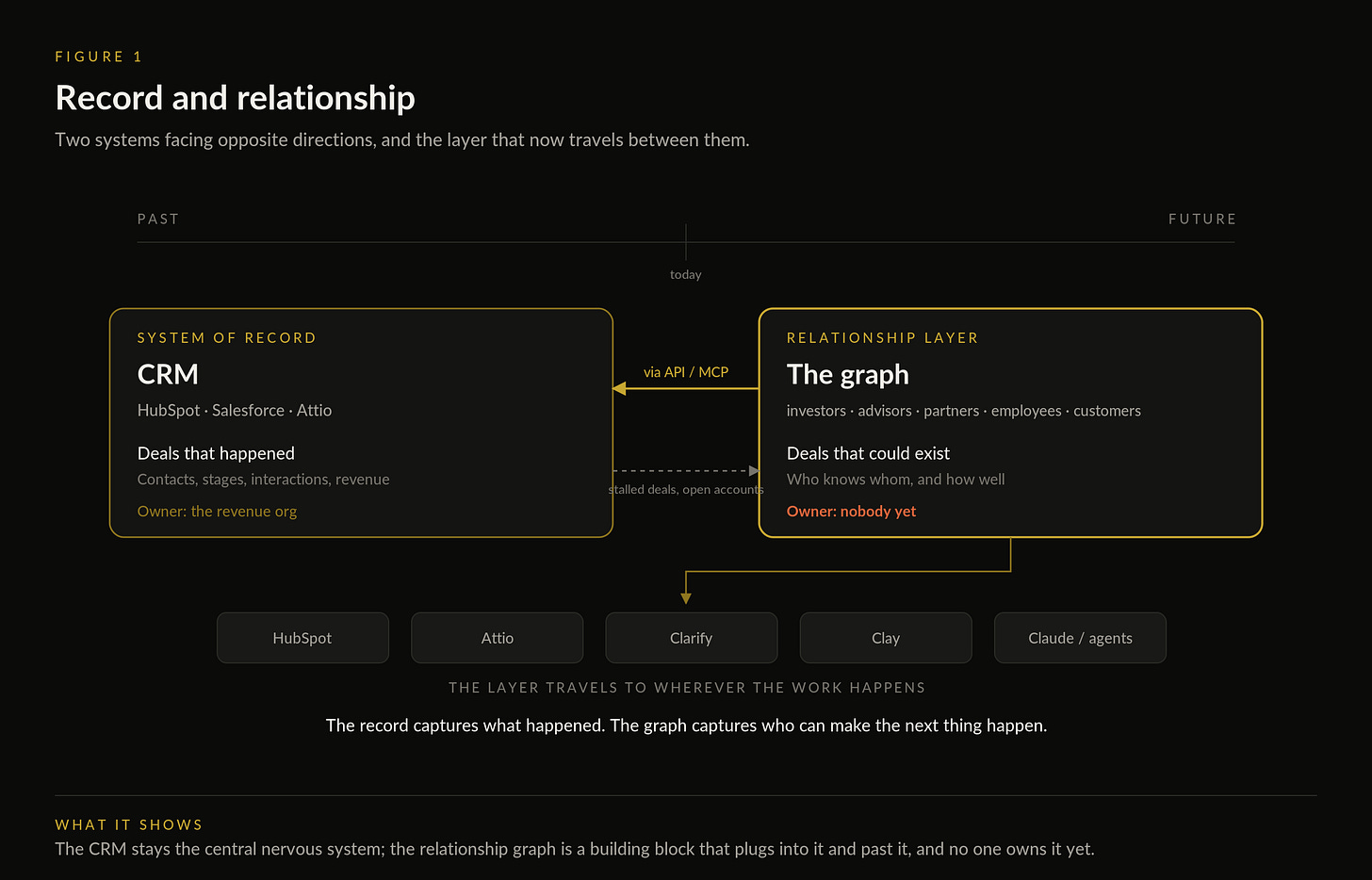 *Figure 1. Two systems, two directions. The record faces backward and belongs to the CRM; the graph faces forward and belongs to nobody yet, which is the whole question of the episode.*
 -
LinkedIn is your audience, not your network, and a connection alone scores as "potential."
A LinkedIn connection is binary, no context, and Olivier puts the share of connections people know at five to ten percent. So The Swarm stacks six edges instead: work overlaps, education overlaps, investor overlaps, LinkedIn connections, LinkedIn engagement, and email and calendar contact. Each relationship scores potential, likely, or confirmed: emailed, met and connected is confirmed; a single meeting or a short work overlap is likely; a LinkedIn connection and nothing else is potential.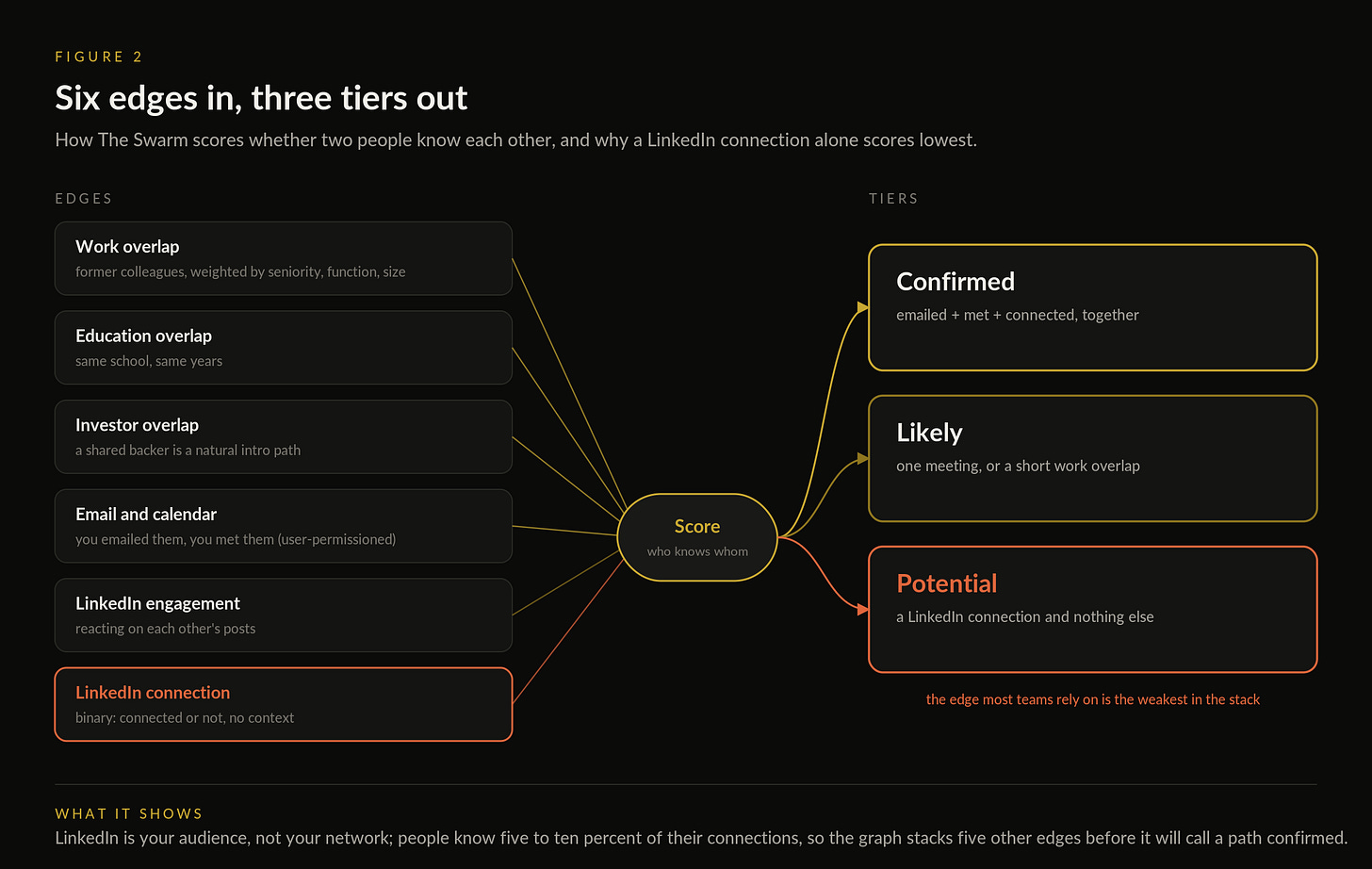 *Figure 2. Six edges in, three tiers out. The single edge most teams rely on is the weakest one in the stack.*
 -
The layer is a building block, and the CRM stays the central nervous system.
Go-to-market engineers build agents on The Swarm's API; sellers use it inside HubSpot, Attio and Clarify, with Salesforce in progress, and in Clay workflows. With the HubSpot MCP a rep can take every deal stalled for ninety days and ask for a champion or investor in the swarm who can unstick it. Olivier still calls the CRM the central nervous system, because that is where revenue is recorded and reported, and the bet is that when every CRM ships a warm intro tab, the tab is built on The Swarm. -
Freshness is what breaks at scale, so they built the data layer themselves, with the consent lines drawn in advance.
No existing provider was fresh enough, so The Swarm built its own: roughly 500 million profiles, 100 million companies, job-change tracking, and a live enrichment endpoint that refreshes a profile on demand. Work, education and investor overlaps are computed passively from public history; LinkedIn connections, email and calendar are user-permissioned and visible only to the admins of that company's swarm. Every company's data sits in its own silo. -
The data took five years. Orchestration is what comes next, and the proof is forty percent of their own pipeline.
Olivier vibe-coded Swarm Send, which ranks the best-scored intro paths to target accounts and drafts the requests; roughly forty percent of The Swarm's pipeline now comes through intros. The pattern he wants to productize is one a customer's go-to-market engineer already built: three intros dripped to each seller every Monday morning. The test that proves the bet is a report, not a case study: thirty percent of pipeline from warm intros, visible as fields inside the CRM, next to paid ads on the same chart.
The Pro Library
Every episode of this show, and every Show Me Your Stack, now lives as a written playbook in one searchable place. Fifty podcast episodes, eight stack breakdowns, and the tools behind each one indexed across all of them, so you can pull every episode where Clay or Claude Code shows up before you wire it yourself. It is part of Pro. If you are a member, sign in at pro.gtmvault.co with your subscriber email. If you are not, this is the reason to upgrade.
Olivier Roth
- LinkedIn: https://www.linkedin.com/in/olivier-roth/
- The Swarm: https://www.theswarm.com
Rick Koleta (Host)
- LinkedIn: https://www.linkedin.com/in/rickkoleta/
- Newsletter: https://gtmvault.co/
GTM Vault
- LinkedIn: https://www.linkedin.com/company/gtmvault
- YouTube: https://www.youtube.com/@gtmvault
- Website: https://gtmvault.co/
Previous episodes include
See all previous episodes here
The GTM Vault Podcast is a breakdown of how high-growth companies design, test, and scale revenue architecture. Visit gtmvault.co for more episodes, the GTM Vault newsletter, and Show Me Your Stack.
Every tool operators name on GTM Vault is in The Stack Index, placed on the layer of revenue architecture it serves. Build your own stack at pro.gtmvault.co/stack.
Full transcript
Full transcript of GTM Vault Podcast episode 51, lightly edited for readability: names and product names corrected. Speech is otherwise as spoken, and timestamps refer to the recording.
[0:01] Rick Koleta: Your CRM knows the deal, the stage and the contact's title. It does not know which person on your team can actually get you into the account, or that the champion who just changed jobs is now a warm door somewhere else. The path that closes, the warm one, never lived in the system of record. It lives in the collective network of everyone you work with, and until recently, there was no object for it. In this episode of GTM Vault, Olivier Roth breaks down the relationship layer he is building at The Swarm. Why it sits alongside the CRM rather than inside it, and who ends up owning the join. And who ends up owning the relationships? Welcome to GTM Vault, trusted by twenty seven thousand plus founders and operators building the future of revenue. For a year this show has argued that the system of record you already own do not capture the thing that moves deals. My guest today built a company on that exact gap. Olivier Roth is co-founder and chief growth officer of The Swarm, a relationship intelligence platform that maps the collective network of a team and pipes it to wherever the work happens, HubSpot, Attio, Clay, and through an MCP server into agents. The Swarm calls the motion go to network. Warm paths run at the scale cold volume used to operate at. Today's core question is when relationship data becomes its own layer that travels to every tool, what is left of the single system of record and who ends up owning the relationship? Olivier, welcome to the show.
[2:00] Olivier Roth: Thank you, Rick. Great to have great to be here. Thanks for having me.
[2:05] Rick Koleta: The CRM records, the deal, the contact, the stage. What specifically about a relationship does it structurally fail to capture and why has the gap survived twenty years of CRM?
[2:17] Olivier Roth: Yeah, so we like to sort of compare The Swarm with a traditional CRM. The Swarm is not a CRM, just to be clear, but it helps understand like the gap that it fills, like you said. So a CRM, if you think about it, is very good at recording the past. It's recording, it's a system of record, right? It's like recording interactions that have happened that are tied to a deal or an opportunity. and it's very good at that, right? But if you look at the future, if you look at like the other side, okay, what are all the potential deals? What are all the potential opportunities that you can create? That doesn't live in your CRM, right? And The Swarm is basically combining the network of your advisors, your investors, your partners, your employees as well, your happiest customers. I'll explain more in detail how you can do that, but we basically like combine the networks of everyone, and now you can see the network of your network. And so you basically, it's basically an anti-CRM, if you will, peering into the future, what's possible from the relationships that we have today, versus like, you know, recording existing deals, which obviously is very important too. But that's how we think about The Swarm in contrast with a traditional CRM.
[3:43] Rick Koleta: Define relationship intelligence operationally, not as a category. When The Swarm maps a network, what is the actual object? What are the edges and where does the data come from?
[3:56] Olivier Roth: Yeah, so when you think network, most people immediately think LinkedIn, right? And I just want to say that LinkedIn is part of the puzzle here. LinkedIn is part of the data that we bring in, but it's not the entirety of your network. In fact, LinkedIn is like a I in my mind, LinkedIn is your audience, it's not your network. But there is nothing else really to capture your network. And so people like kind of equate LinkedIn and network and try to ask warm intros to their connections and so on, and it doesn't necessarily scale. What we mean by relationship intelligence is yes, LinkedIn, that users can opt in and add their LinkedIn connections on The Swarm, and that's that's part of like, you know, the data, but also someone's former colleagues, that's what we call work overlaps. Someone's so people who went to the same school at the same time. That's what we call work education overlaps. investor overlaps, you know, investors that invest in like multiple companies, like there is a natural intro path there. If you're company A, you ask your investors for intro to company B. People do that often, right? and then LinkedIn connections. There is also LinkedIn engagement, so people who react on each other's posts on LinkedIn. and on top of that, email and calendar contact. So if you've emailed a person or if you've met with a person, that's a signal. And so The Swarm sort of like stacks up all of those dimensions of a person's network. All of those relationships. We call it relationships because it's not just connections, because if you say connections, people think LinkedIn and it's like, so you know, Facebook has friends, LinkedIn has connections, The Swarm has relationships, right? So relationships are like, you know, all those business relationships are around like around all the individuals that are interested in the success of your business. So like I said, investors, advisors, and on. We combine all of that, we score those relationships to give you a sense of like who knows who and how well, and we make that available through our integrations. You mentioned some integrations, the API, the MCP. So that's operationally like how it's like. How it's how it's built.
[6:22] Rick Koleta: You landed on go-to-network as the framing. What does that name let you say that relationship intelligence does not?
[6:31] Olivier Roth: Yeah, go-to-network. you know, one of our early competitors coined it, Commsor. And recently we acquired Commsor. and you know, like hats off to their CEO, Mac Reddin, who coined that like go-to-network. Instead of go to market, it's go-to-network. I mean it's not it's not instead of, but you know, it's like a play on go-to-market, go-to-network. And I think it says what it is. You go to your network and you know you instead of sending a thousand, ten thousand, a hundred thousand call emails or whatnot, you first map your network, see, you know, who knows who, and then prioritize your target accounts based on that, and then send you know some warm intros to the people to those to those people that can introduce you to the those opportunities. So anyway, I like go-to-network because it's sticky. GTN, the acronym, just like, you know, it sticks and people use it on LinkedIn and whatnot, like so we it's it's de facto, I think, like, you know, the category here.
[7:42] Rick Koleta: Your topic is the future of CRMs and how relationship data comes alongside the system of record. Draw the architecture. Does the relationship graph live inside the CRM, next to it, or underneath it? And who owns the joint? Who owns the relationship?
[7:57] Olivier Roth: Yeah, so yeah, so we're not trying to replace the CRM, like we think you know, that you're essentially like you can augment like your CRM with relationship data. So where does it live? You create a swarm account, you know, you add your investors, partners, advisors, and so on. We map their former colleagues, their school alumni and whatnot. Then users can opt in to bring in the LinkedIn and email and kind of their contacts. All of that data you can then query. e either directly via the API or MCP or using the integration in the CRM. So you we have like we're releasing the HubSpot MCP, for example. So you can be on HubSpot and you can say, HubSpot, take my like deals that are stalled over the last 90 days and look for you know potential network intros, like maybe people that are like existing champions or investors that are like In our swarm network that could like help us get those deals on stock. That's like one example. That's like a middle of the funnel kind of like motion. and you can prompt that data directly within the CRM because CRMs are obviously adapting MCP too. So that's that's great. you can see you're looking at like an opportunity, you're a seller, looking at your account. There's an opportunity here. You can see like, you know, in a card inside of HubSpot and other CRMs. You can see, there is like you know a potential intro path here to the CEO, to you know, someone else at the at the organization. So it's basically augmenting the CRM with relationship data that inside The Swarm that you can query and prompt and do a bunch of fun things with.
[9:47] Rick Koleta: The honest tension is relationship data a standalone layer or a feature that the CRM eventually ships natively. Make the case.
[9:58] Olivier Roth: Yeah, yeah. So you know, I think like we've we're seeing a lot of creativity in how people use relationship data. Like we're we're seeing go-to-market engineers and you know, folks that essentially do you know go-to-market engineering work, growth, rev ups and marketing and sales people like use The Swarm relationship data in like different ways. So a lot of people are vibe coding things, right? vibe coding tools, building agents, you know, are building their entire company, you know, on like people data that they use The Swarm with. So there is a whole area of our business that's actually like builders building on top of The Swarm, which is amazing. And another part of our business is like CRMs integrations, they're like distribution partners for us in a way, right? You you're on HubSpot, you pay for HubSpot and then you use The Swarm data so you it's usage based, right? is it going to become like a like a native feature of the CRM? I don't know. I think so, you know, eventually. We're still in the first few years of this. This is still relatively new, so we'll see how things pan out. But you know, I think like right now what's ex exciting me is like both how our sellers using it in the CRM in the moment and then like all of the plays that you can do also with clay and like, you know, building directly on top of our API or MCP and so on. So yeah, both are both are true at this moment in time. And we think of relationship data as a building block, right? So you can use it inside your CRM, you can use it outside of your CRM, you can use it in many creative ways. And we don't wanna put we don't wanna put a lead on that creativity, right? So
[12:02] Rick Koleta: Right. You integrate into HubSpot, Attio, and Clay and pipe the graph through an MCP server into agents. When the relationship layer travels to wherever the work happens, what happens to the idea of a single system, a record at all?
[12:21] Olivier Roth: Yeah, I suppose, you know, like that's a bit of like the question to like where does the record live but I mean I do believe like the CRM remains the central nervous system of the revenue organization, right? because that's where deals are closed, that's where like revenue is recorded, that's where reporting. happens and if it's being reported if you can measure it's real and that's like ultimately like that's that's kind of like the CRM like in CRM there's relationship already in CRM right like so customer relationship management like what we what we say is that like you know you know not just your customer relationships but like your investors your advisors your partner and so on it's a it's a much broader than that So so yeah, but there is definitely a lot of like you know change with like CRMs and how they how they work and how they operate. I think like being like a nimble system of records that have the ability to pull in contextual data and signals directly is where it's heading. I mean with like with rocks and Revo and all the and Monaco and so on, like It's basically like they don't call themselves CRM because they think of them like rev revenue orchestration, revenue platform, but it's like kind of like this like this picture of a fully integrated system. not just a system of record anymore, but a system of intelligence and a system of action all rolled into one, right? That's their that's their model. I don't know if they're gonna succeed in and top all the big CRMs. We'll see. But anyways. Lots of moving pieces in that arena as well. So
[14:22] Rick Koleta: Yeah, let's dig a little deeper into that. Where does the graph actually change a reps day? Walk me through one motion from I need into this account to a warm path that closed and what the CRM alone could never have surfaced.
[14:38] Olivier Roth: Yeah, so we have a Chrome extension, you know, that's going to leave on your browser and you can check a relationship, you know, you're on someone's like LinkedIn profile and you can check like a relationship. That's one like example of like, okay, I'm I'm looking at that prospect and right there I have like The Swarm context. there's an intro here to this person from like our For my colleague who's sitting next to me who used to work at that company. That's like that's stuff that people find manually, opportunistically like realize that we bring, you know, to their attention. So that's there's some you know just in time kind of use cases there. for sellers like about to get on a call or maybe like, you know, looking for a warm intro to an account. I'm looking up like one specific account. And one way to do this that's that's exciting to us is like using Claude. You know, we have the Claude integration, so you can go on Claude and you can say, I'm trying to get I'm trying to get into Stripe or whatnot, and I'm s we're selling to the you know marketing leadership. And so do we have do we have an intro to the marketing leadership at Stripe in the US? Right? And Claude takes that natural language prompt, turns it into an API query, that's what MCP does essentially. And then returns like some intro path if you have some intro path through your Swarm account, right? so that's that's another like really exciting case. That's for like the seller, I think, like for like the sales team. And then for like if you zoom out, like in the revenue organization, like go to market engineer. Someone who's gonna like already like being pulling together signals and stuff on clay, for example. you know, they would they have a list of 10,000 target accounts. The Swarm is one additional enrichment layer. They can see, like, okay, there is 20% of those accounts, there is an intro path to I'm going to, you know, on clay, I'm going to create like a workflow that's going to ping. each seller's to tell them every week, you know, those three there are three intros that you could try to activate this week. That's one like that's that's one use case. where the seller is like the end user, maybe like the person who is like sort of like quarterbacking is like more of a growth or go to market engineer person. So yeah, just to give some examples here.
[17:17] Rick Koleta: Got it. I wanna dig a little deeper into the data underneath here. Job changes, people data, network mapping, live enrichment. Which of these is the hard part to keep accurate and what breaks first at scale?
[17:32] Olivier Roth: Yeah, so to know who knows who, we need to know who's who. So we build our own, you know, you know, data layer, basically. Like so we have five hundred million profiles, a hundred million companies. We are a registered data broker in half a dozen states in the US, GDPR compliance, CCPA, SOC2 now, and so on. We've we've learned over the last five years, we've really learned like how to handle data with like the right like guardrails in place and so on. And so we have as a result of that, you know, we have the relationship data and then underlying we have people data. So, you know, if you're building like a sales product or an agent or a recruiting tech product or deal origination product for fintech or like some a lot of like startups go and like they actually use The Swarm data. And some of the companies that I mentioned earlier, that the revenue orchestration platforms, like they actually like use Swarm as like their enrichment data. and then we have baked into that job change tracking. I mean, what breaks at scale when you t when you think of data is like freshness. It boils down to like, is the data fresh? Right. And so we have a live enrichment endpoint where people can refresh profiles instantly. And so we have this flag where the more customers we have, the better the data, the fresher it gets. the more people like you know refresh the data using our API and so on, the more like you know, the more accurate and fresh it is. So we put the emphasis on that and we tried to work with some existing data providers. We just didn't find the data that was fresh enough. So we built our on it's one of those cases like entrepreneurship, you're like, you see. You try you see something you see a gap, you build it, and now so now we really operate like you know, selling data. and the relationship data build on top of it. Both both levels, right?
[19:35] Rick Koleta: Yeah, I agree. See, a team's net a team's collective network is the raw material. Everyone's connections pooled. What is the privacy and consent architecture that makes that safe to pool and where do you draw the line?
[19:55] Olivier Roth: Yeah. So LinkedIn connections, email and calendar contacts, those are user permission. Right. So you basically when you start a Swarm account, you add your connectors, we call them. So you define the people that you're gonna ask intros to. those are hundreds or sometimes thousands of like people that are again investors, partners, advisors, all of those people that are somewhat like familiar with your company and interested in its success. And what we do on top of our database is we map the work overlaps, education overlaps, and invest overlaps. And that's basically data that exists. I mean the fact that you've worked with someone in the past, it's something that you could manually draw, but like we build an algorithm that does that looks at seniority function, geography. sizes of companies to that's the intelligence part of it. So all that stuff is done passively. The stuff that's like belongs to the users. By the way, your LinkedIn connections belong to you. Like your under GDPR LinkedIn has to give you your connections. That's why you can download them. They make it like a little bit like tricky sometimes, but you can, you know, you're on your connections. And obvious obviously you also own like your email contacts and calendar contacts. But that's user permission. So we draw the line at that. I mean, as long as it doesn't break the terms of services of other tools, like that's that's how we that's how we built it. So it's like so it's future proof and compliant, you know, in any in any way we can. Also, like I'll say like that The Swarm, like it's team by team, right? So the data is like siloed by company. So you have your swarm for your company, and that's your data lives in that silo, right? You by importing your connections, you're not you know sharing data that others will be able to see. Your connections are only visible by the connect by the admins. on your on your on your team, on your swarm team, on your workspace. So yeah, that's how we that's that's how we hope that answers the question.
[22:21] Rick Koleta: Yep. When an agent queries your graph and gets a confident wrong intro path, what was missing and how do you keep relationship data from becoming the next thing that hallucinates?
[22:34] Olivier Roth: Yeah. So we have like a scoring of potential, likely, and confirmed relationship. So confirmed is like you've emailed and you've met, you have calendar and email and maybe you are connected on LinkedIn. Like those three things together that's gonna that's gonna impact the score to that's gonna mark it as confirmed because there is overwhelming data that the two you know people are gonna know each other. Likely there is like less data, maybe there is like a calendar meeting, maybe there is a you know, a short work overlap and so on. And potential is like, for example, LinkedIn connection. A LinkedIn connection, we score it as potential. If the only thing we know between two people is that they're connected on LinkedIn, we say potential, which is basically saying like they may or may not know each other. That's the nature of LinkedIn connections alone. And that's w one of the reasons we built all of those other data points. now to your question like on AI and like hallucinations, like you know, I think like the LLM like is gonna translate your question, your query into an API query and pull that data from your swarm account. So if you if you if you create like a defined narrow you know clear prompt. you're gonna get like you're gonna get like an accurate response. But that's true for any use of like AI, I think. Like but if you if you create a unclear, convoluted or abstract prompt, yeah, then maybe you're you'll you'll get some subpar results. yeah.
[24:25] Rick Koleta: So HubSpot could build relationship mapping into the CRM tomorrow. Why does the layers stay independent instead of getting absorbed by the system of record it sits next to?
[24:39] Olivier Roth: well HubSpot Hobspot Ventures is one of our investors. they're they led our sorry, HubSpot Ventures like led our are still around. Like so you know, the CRMs are paying attention to this and we and we love it and it's being incorporated more and more. I mean with MCP like the HubSpot industry that I described and so on. it's being incorporated like more and more. Not not just relationship data, but also like a lot of other signals and That are that are being incorporated. So it's not really sitting aside. It's like now it's it's not yet like a native out-of-the-box feature. And we hope it becomes one day in the near future, but it's like queryable, promptable, you know, and flows into your CRM already, like Clarify, Attio, HubSpot. you know, Salesforce soon. We're working on that integration. So yeah, it's it's it's right there. It should be at the fingertips basically of like the seller. It should be like right there where they where they where they need it.
[26:03] Rick Koleta: LinkedIn already owns the graph most people think of as the network. What does The Swarm see that LinkedIn structurally will not or cannot expose?
[26:14] Olivier Roth: So LinkedIn connections are binary. It's either you're connected or you're not connected, right? There is no context. And that's one of the reasons like people know only five, 10% of their connections. you know, there is a fraction of people that are extremely protective of their connections and only add people that they really know. But the truth is 90% of people use LinkedIn more as like an audience. So you build your audience, you want more followers, it also makes you look good, right? It's a social media platform. And that's like the social media is the keyword here. so it's a place where they sell advertising to us. They like LinkedIn wants you wants you to come and consume content. They don't care if you ask for warm intros and Yes, you are maybe paying ninety-nine dollar per month for LinkedIn sales navigator for every one of your salesperson. And I and I just like was never able personally in you know in our marketing and our sales, like able to really use it because like LinkedIn connections are so loose now and they're becoming looser because it's been like twenty years. I mean they're starting in two thousand three, twenty three years that That people have just been adding connections off. So it's like it's becoming a little bit meaningless. not from an audience standpoint. That's great. That's great. And I love LinkedIn to learn and to meet people and to and to exchange and to and whatnot and to market our stuff a l a lot. But that's that's what people think as the network, but it's like it's not it's not your network. Like think about like every person you worked with is not on LinkedIn. every person you went to school with, that's not something that LinkedIn will tell you. You know, you can do it manually, you can look at previous company, blah one by one, but that's not scalable, obviously like the so that's the simple yeah difference between The Swarm and LinkedIn.
[28:20] Rick Koleta: So you're you are folding in another network led company, Steelman the Skeptic. Steelman the Skeptic. Is this because relationship data is a big standalone market or because it is hard to be a standalone business and you need more service area?
[28:42] Olivier Roth: sorry, I didn't understand the question. Do you do you mind like re repeating
[28:45] Rick Koleta: Yeah, yeah, sure, sure, sure. So or I guess you folded in another network like you acquired, right? You I'm saying Steel Man the Skeptic. like
[28:52] Olivier Roth: okay, sorry, sorry.
[29:01] Rick Koleta: respond to the skeptic, like what's your defense against the skeptic guy? So let me repeat that. You folded in another network led company. Steel man the skeptic. Is this because relationship data is a big standalone market or because it is hard to be a standalone business and you need more surface area?
[29:23] Olivier Roth: Yeah, so we were so aligned with Commsor in terms of like what we're building. Like they built a very, very good software for this, for go-to-network. they built the category a lot over the last five years. So they have, you know, a lot of great, great marketing assets and they had great features. They just didn't launch the API in the MCP. And I think that's where we sort of like you know, got ahead over the last few years. and so it was a natural thing for us to now acquire Commsor. You know, it was just a natural moment. a very natural thing. We've we've we've known each other as competitors and for like four or five years now. so it was a very natural like sort of thing. Like I think the go-to-network category In 10 years, we'll look back and we'll see like this thing is huge because every single B2B company on the planet, like a B2B seller, could use The Swarm. Now, like who are we selling to? Of course, like we're tech selling to tech a lot right now. It's just early adopters and whatnot. But anyone with like HubSpot and Salesforce, which is like, I don't know, I think HubSpot is like 300 or 400,000 customers worldwide. I mean. That's a lot of companies, right? every one of them can be a swarm user because like if you're B2B, if you're in B2B, it's relationships. Like it's that's how that's how business has always worked, and that's how you always work. And we bring like that to we wrap like technology around that, right? So I think it's a huge category. I think it's still emerging and it's still like, you know, finding its it's it's it's it's it's way you know but like I'm super excited about like the CRM integrations and the MCP and so on because that's just this like tidal wave of how Go to Market operates and we're we're just right there, you know, ready to seize the moment. I mean that's why I do what I do. Like I'm excited.
[31:37] Rick Koleta: Yeah, and tell me this, if in three years every CRM ships a warm intro tab, what is left that is defensively the swarms?
[31:46] Olivier Roth: Well we're we're the data layer, right? Like we are the infrastructure that we hope every CRM and agents and companies that are building this as a you know as a as a feature like will use. So we think of The Swarm as a building block that opens the gates to a lot of creativity on how to use the data. That's why we have the API, make it open and make it self-serve and whatnot. So if every CM has a warm intro tab, like I hope it's built on The Swarm. That's my you know, that's that's my that's my hope and that's well that's how it's how it's shaping up over the last five years. So hopefully we're we're we're onto something good.
[32:31] Rick Koleta: You are the growth co-founder of a company whose whole pitch is that warm relationships beat cold volume. How much of The Swarm's own pipeline runs on The Swarm and what does that dog fooding look like?
[32:44] Olivier Roth: Yeah, I so I vibe coded like something called Swarm Send that is orchestrating intros. that we are it's basically like you put your target accounts, your ICP, and it's going to create those intro emails. Now the sending, right? The request of the intro is still human. What what I've done is I create I took The Swarm data, you know, I vibe coded a tool that's basically like putting all of the best but all the higher the sorry the best intros the best scores possible and the best intros possible like radio send emails I send on behalf of our CEO David Connors and that's one example of like you know just dog fooding because I preach like building agents on top of The Swarm while I did it and it was a lot of fun and our pipeline is like I think at this point like probably forty percent intros. so yeah we're like the proof is in the pudding, you know, like we, you know, I use The Swarm extensively, sort of like every, every week now. for those like kind of large scale campaign. And then like for other adjacent use cases that I think are interesting, like marketing, and we're looking for a speaker for a podcast. And guess what? We have the network of our investors, advisors, partners the I can look for I can look for a speaker there. I you're you're you know you're on a podcast. That's that's that's how do you get your guests like relationships, referrals, like intros, right? A lot of the times. And so that's one like that's when adjacent use cases. and I just like to point those out because it's just you know, it we you zoom out a little bit and in fact like you can do a lot of things with The Swarm. But our focus has been sales. Because it's the biggest use case. and it's the one our users like, you know, have been have been it's the pool the market pool, but and recruiting, fundraising, marketing, tons of like things you can do when you know the network, right? When you know who knows who for the for the for company building as a whole, I guess. So Yeah, stay give it give it go and s and unleash your creativity.
[35:14] Rick Koleta: What did you have to say no to? S Speaking of creativity, what did you have to say no to? Relationship data touches sales, recruiting, and fundraising. How do you keep the story from sprawling across all three?
[35:28] Olivier Roth: Yeah, we focused on sales, like I said. Like we initially launched as a recruiting actually, but we pivoted very quickly because our early design partners were like, I want to use it for sales. and it was the pool from like the market and investors. Okay, so that was very clear that you know this is like mid-market enterprise sales is like B2B mid-market enterprise sales is the biggest like piece of the pie here in terms of like market and so on. But then like because we have the API and MCP, we end up working with like recruiting tech that are building on top of The Swarm. And but you know, we have we have to we are a small startup, so we have to position clearly and we have to like be known for something clear, right? And it's if you say, Hey, my company can do anything for your company, that's not a good pitch. So, but I like to think of it like You know, like T shaped, T shaped positioning. It's like you have one like clear bar, but you can also do other things and that's okay too. Like, so that's kinda how we how we roll. If you go to our website, you'll see like there are some recruiting case studies and man, like we have like a deal origination, like fintech company. How do you originate deals? Like yeah, you look through like the existing network and like which founders do we have access to and so on. So there are some really like adjacent use cases that there were that we leave open. But yeah. focuses everything in an early stage startup. So great question.
[37:11] Rick Koleta: Paint paint twenty eight, a revenue team of what size running, what agent squaring, what relationship layer, and what does the CRM do in that picture versus what the graph does.
[37:22] Olivier Roth: Hmm. Okay, 2028. I think at that point, like we have nailed the orchestration too. So I touched a little bit on that with Swarm Send. We basically spend the last five years on like the data. First of all, building like that layer of like people data, job change tracking, live enrichment and stuff. We build a relationship data on top of that. The next thing is like, how do you orchestrate warm intros? And that's process, not just product. And it's also culture in a way, not just like not just product and workflows. But like a part of it is like our job, meaning like Okay, I'm a s I'm a we have a team of thirty sellers. Like, can anyone ask an info to an investor? Probably not. So there are rules of engagement and there are things that are gonna be like there are the unspoken rules. I mean it's the same with LinkedIn. Like, do you go, does an SDR go and look at the LinkedIn connections of an investor and sends them an email saying, Hey, can you introduce me to this person? No, so that's like an unspoken rule. That's true for The Swarm too. But there is like a lot of like what I described earlier, you know, you get like three intros sort of like drip fed to your sales ICs every single week. Monday morning, you open your email, you get three intros. Where we're at now, it's like A Go to Market Engineer has built that for his company and he's running it on their site. And I'm turning, I'm trying to turn that into case study. But like I think in two years, as part of The Swarm, you'll have something more like out of the box. You can like, you know, you can you can set up that workflow. or I don't know, part of that workflow on The Swarm. But but it's yeah, we're just following like our customers, you know, what are they? asking for what are what do they want next. and I think yeah orchestration is basically like the hardest having the like air traffic control of intros and so on.
[39:28] Rick Koleta: What has to be true in eighteen months for the relationship layer bet to be provably right and what would tell you it was wrong?
[39:38] Olivier Roth: Yeah, so what would tell us if the layer was wrong, or the graph? Well, I mean, we need to like that goes back to like what the CRM is good at is reporting. So now that we're getting in the CRMs, we also need to get in those like reports and we need to show that we have 30% of the pipeline generated by warm intros that have been like, you know, sitting on that have been created by The Swarm. And that's our biggest challenge. right now we're getting the data in the CRM. So we're gonna exist like more as like fields, you know, in the CRM. That means like we can exist in like the reports and that makes the ROI you know clear. I mean I think the ROI is already obvious just because like people know that relationships you know intros and so on that they generate like bigger deals that tend to stay longer as customers and so on. Like the ROI is clear, but like change is hard. And so if you can if we can really have those metrics, like we're we have some anecdotal stuff. We have case studies and stuff. I can tell you like some customers that have been successful with this, like, but that's like case studies. We we want like the big picture, I think, in like in a few years to be like, yeah. paid ads versus warm interest on. Now we're not saying it's gonna replace the other stuff. We're just saying like it's the most valuable and the most underutilized asset of any company today. And we're here to prove it, you know.
[41:26] Rick Koleta: Yeah, I'd like to move on to the rapid fire section of the pod in one sentence, first instinct, one GTM metric that deserves more attention this year.
[41:44] Olivier Roth: The viral coefficient. I don't know what comes to mind. Like the ability for your product to like, you know, go viral. Like if it's if it's over one, like one user creates more than one user. so the cost of the cost of advertising, of marketing that's gone up. You need like word of mouth, you know, to work and you need your product to be to be able to like catch on and be viral. So Are you paying attention to that as a as a marketer?
[42:19] Rick Koleta: The most overrated signal in Outbound right now.
[42:29] Olivier Roth: Most overrated signal in Outbound. I would say it's not the signal, but it's like the overuse play of saying, I think I saw your commenting on this LinkedIn post. You know, that's now I think overrated and I still get a lot of like cold emails that are like, you know, saying that. And I'm just like, yeah, that's you know. that doesn't that doesn't move me anymore. It's just like overused, I guess. But the signal itself I think is good for relationship mapping. Like you could say, okay, you commented on that person and you used their first name and you said something that sounded human, not like AI. Now that's a signal for relationships, but that's not necessarily something you used to reach out to the person, call and hope that they reply because they've seen because you've seen that they commented. Not anymore, unfortunately.
[43:25] Rick Koleta: One thing a founder should delete from their sales stack today.
[43:30] Olivier Roth: like a tool or from the sales stack. I'm like pick a tool to delete, that's a tough one. or a type of tool maybe. I mean I'm thinking think of like my tool like that I should delete.
[43:53] Rick Koleta: We could I mean we could skip it too if you don't wanna answer.
[44:01] Olivier Roth: Maybe delete your like second call recorder or third call recorder, please. When you join a call and there is like three call recorders greeting you, it's time now to like converge on the w on the one, you know.
[44:15] Rick Koleta: Yeah, there should be an auto detect in these conference calls, right? Or just allow one. A habit or mental model that shapes how you build.
[44:27] Olivier Roth: I just prototype stuff very quickly. I use lovable mental model. It's like if I have an idea and I can I can throw a quick like prototype, I'll I'll do it. That's how I build, and I can show it to like our customers, my co-founders. And it's real now. And even if it's like if it sucks, if it's like if it's really just like a very, very, very early version of the idea, it's the shape of the idea. So, you know, I do that like every week. Like this weekend I just built a little a little website to own like to host like a go to network university and so on. And I pitched it to my co-founder and It's so easy now. Like you just on lovable. It's like it took me like thirty minutes on my phone. On my phone. Like so it's like so it's just prototype, like just like yeah, just prototype you could prototype anything and everything. Like that's a ha that's how I that's how I roll.
[45:33] Rick Koleta: Complete the sentence in three years this CRM is
[45:42] Olivier Roth: Augmented.
[45:45] Rick Koleta: Yeah, I like that. And one last question before we close it out. Who runs the best GTM stack you've ever seen?
[45:59] Olivier Roth: I would think like Brendan Short is the host of the Signal. It's a newsletter. that's like a GTM newsletter that's really great. And so he just like knows a lot of like the GTM like, you know, founders and leaders. And his newsletter is amazing. And I would expect he has the best stack anyone's ever seen.
[46:23] Rick Koleta: Olivier, thank you. The relationship was never in the CRM, and now it has a layer of its own. If the last year of this show established that AI is only as good as the structure beneath it, this episode named the structure most teams never modeled. The network they already have, pooled and maybe queryable. The system of record captures what happened. The graph captures who can make the next thing happen. If this sharpened your GTM lens, subscribe to GTM Vault, share it with your team, and come back next week. This is GTM Vault. Build systems, not noise. Thanks, Olivier.
[47:02] Olivier Roth: Thank you, Rick. Thanks so much.